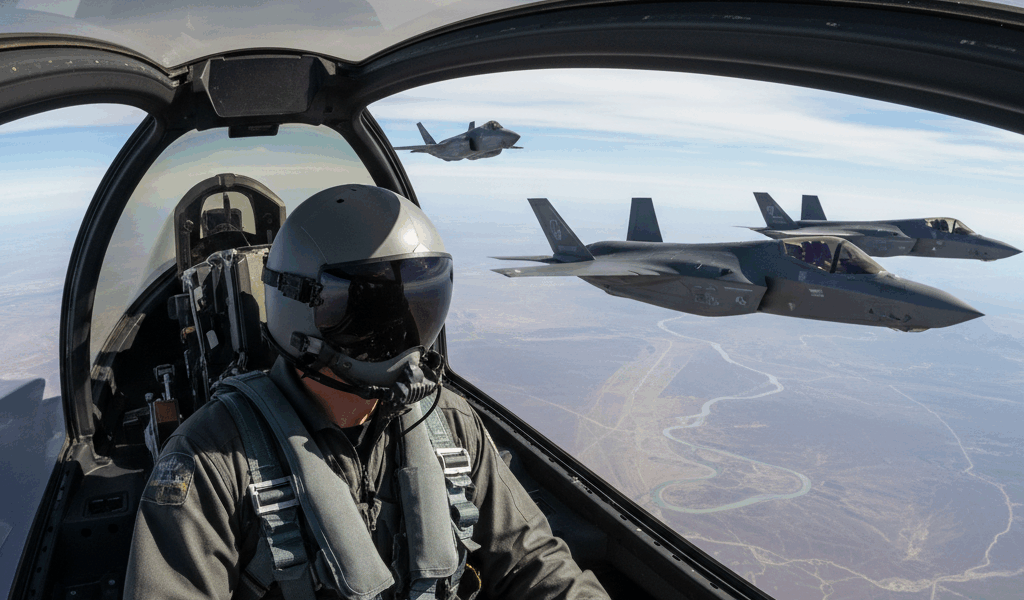
Aviation physiology has gotten complicated with all the G-forces and equipment flying around high-performance cockpits.
High-performance military aircraft push the human body to its physiological limits in ways that would surprise most people. Understanding these limits and training to operate safely within them is essential for any military pilot, particularly those flying fighters and trainers capable of generating extreme G-forces that the body was never designed to handle.
What G-Forces Do to the Body
Probably should have led with this section, honestly. When an aircraft pulls positive Gs, blood pools in the lower body due to centrifugal force that your heart can’t overcome. At sustained high G levels, blood flow to the brain decreases significantly, first causing grayout where peripheral vision fades noticeably, then tunnel vision where you can barely see straight ahead, and finally complete loss of consciousness known as G-LOC that can kill you if it happens at the wrong time.
That’s what makes G-tolerance so critical to understand—the unassisted human body typically tolerates about 4-5 Gs before vision begins to fade. Fighter pilots regularly experience 7-9 Gs during air combat maneuvering when things get serious, making countermeasures essential for mission effectiveness and basic survival.
Anti-G Straining Maneuver
The AGSM combines tensing muscles in the legs, abdomen, and arms with controlled breathing to force blood back toward the heart and brain where you need it. Pilots learn to grunt against a closed glottis while contracting lower body muscles in a technique refined over decades of centrifuge research that has saved countless lives.

Proper AGSM execution can add 2-3 Gs of tolerance—that’s the difference between maintaining consciousness and blacking out during a critical combat situation where someone is trying to kill you. The technique is physically exhausting in ways that non-pilots can’t appreciate and requires excellent conditioning to maintain throughout a fight.
G-Suits and Equipment
Anti-G suits automatically inflate air bladders around the legs and abdomen during high-G flight without any pilot input. This external pressure helps prevent blood pooling, adding approximately 1-1.5 Gs of protection on top of what your straining provides. Modern suits inflate within milliseconds of G onset so they’re working before you even feel it.
Some advanced aircraft include positive pressure breathing systems that force air into the lungs during high-G flight, further assisting blood return to the heart through mechanisms that take training to use effectively. Combined with proper AGSM technique and G-suit protection, pilots can sustain 9 Gs for extended periods that would be impossible otherwise.
Centrifuge Training
Before flying high-performance aircraft, pilots train in human centrifuges that replicate G-forces in a controlled environment where mistakes aren’t fatal. This training validates AGSM technique under real loads, demonstrates individual G tolerance that varies person to person, and builds confidence for actual flight operations where everything happens faster than you expect.
Night flight adds its own visual and workload demands. Our military NVG operations guide explains restricted field of view, depth cues, scanning, cockpit compatibility, and recurring proficiency.

Leave a Reply