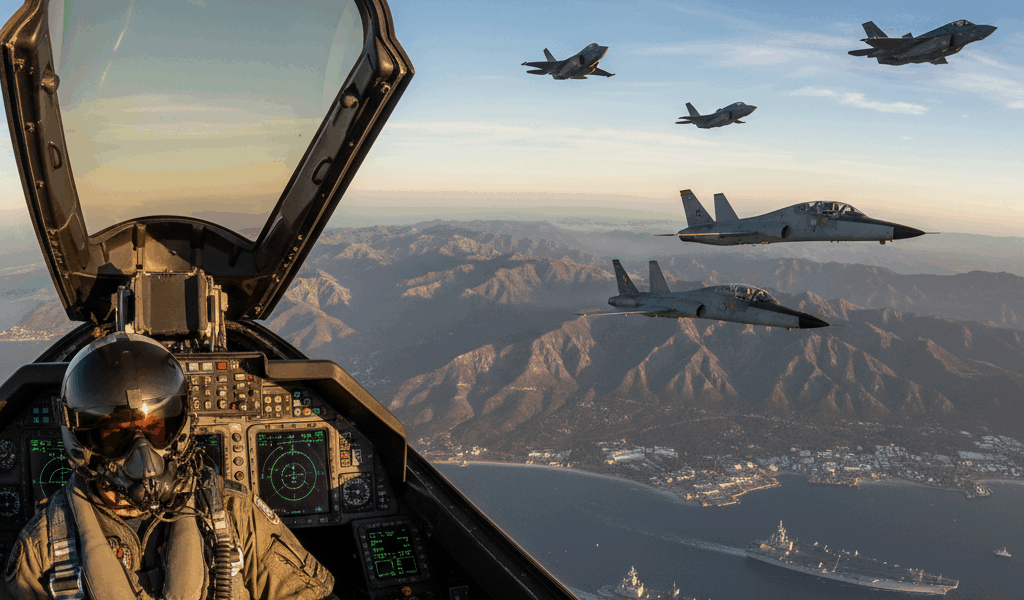
What Makes Military Flight Training Different From Civilian Programs
Flight training has gotten complicated with all the different paths and programs flying around the aviation world today.
Military flight training stands apart from civilian aviation education in nearly every measurable way that matters. While both paths produce competent pilots who can fly aircraft, the military approach emphasizes combat readiness, discipline, and the ability to perform under extreme pressure when lives are on the line.

The selection process alone sets military training apart before anything else happens. Candidates must pass rigorous physical examinations, demonstrate exceptional cognitive abilities on standardized tests, and prove they can handle the psychological demands of combat flying that most people never think about. Many qualified applicants never make it past initial screening despite meeting all the basic requirements.
Probably should have led with this section, honestly. Once accepted, military student pilots face an accelerated curriculum that compresses years of civilian training into months of non-stop intensity. The pace is deliberate and intentional. Combat pilots must make split-second decisions while managing multiple aircraft systems, tracking threats in all directions, and maintaining situational awareness in three-dimensional space simultaneously.
That’s what makes physical conditioning so crucial throughout training. Military pilots regularly experience G-forces that would incapacitate untrained individuals almost instantly. Centrifuge training and anti-G straining maneuvers become second nature before pilots ever climb into a fighter cockpit, because you can’t learn this stuff when you’re already pulling 7G’s.
The aircraft themselves differ dramatically from anything civilian students fly. While civilian students learn in forgiving single-engine trainers that tolerate mistakes, military pilots quickly advance to high-performance jets capable of supersonic speeds and extreme maneuverability that demand precision.
Perhaps the most significant difference lies in the mission that drives everything else. Civilian pilots transport passengers and cargo safely from point A to point B—important work, but straightforward. Military pilots train to project power, defend airspace, and support ground forces in hostile environments where the stakes are measured in lives saved or lost rather than schedules kept.
This fundamental difference in purpose shapes every aspect of military flight training from day one through the entire career that follows.

Leave a Reply