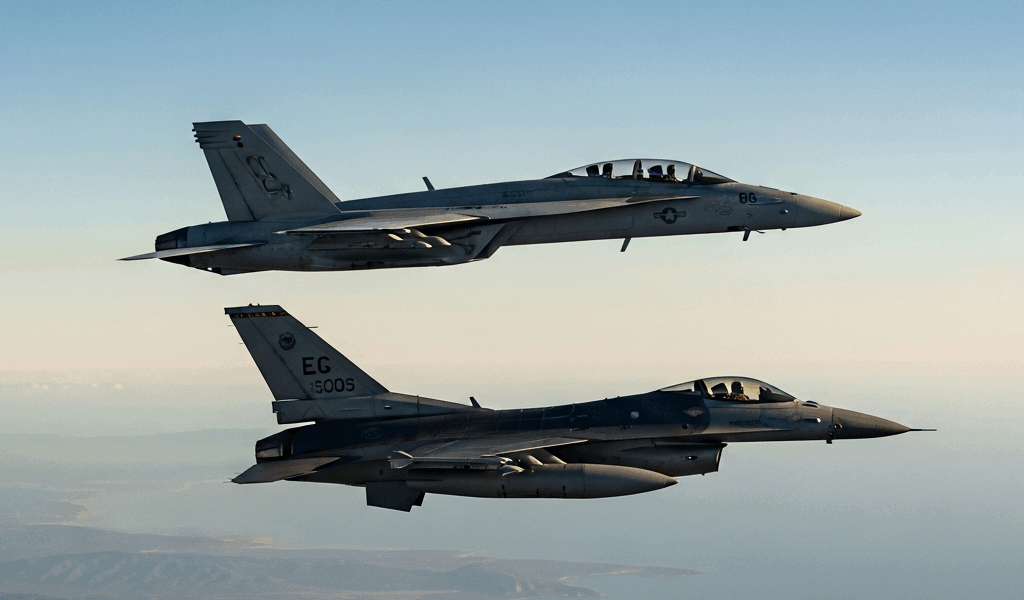
Marine Corps Pilot vs Air Force Pilot Key Differences
The marine corps pilot vs air force pilot decision has gotten complicated with all the half-baked forum opinions and recruiting-booth spin flying around. As someone who spent the better part of two years talking to active pilots, sitting in on recruiting events, and reading every thread worth reading, I learned everything there is to know about what actually separates these two paths. Today, I will share it all with you.
How the Training Pipelines Actually Differ
Here is where the roads split — before you ever touch a cockpit.
Marine Corps officer candidates go through Officer Candidates School at Quantico, Virginia. Ten weeks. Physically brutal. It has more in common with infantry training than anything aviation-related, which is either a feature or a warning depending on who you are. Air Force officer candidates attend Officer Training School at Maxwell AFB in Alabama — nine weeks, different culture entirely. OCS breaks your body. OTS breaks your patience with paperwork. Both get you commissioned, but the experience shapes you differently from week one.
Once commissioned, Marine pilots enter Naval Aviation Training — the same pipeline Navy pilots use. Pensacola, Florida for primary flight training in the T-6B Texan II. Then a community split. Jet pipeline sends you to NAS Kingsville or NAS Meridian for advanced work in the T-45C Goshawk. Rotary sends you to Whiting Field. Here is the detail nobody leads with: you are training alongside Navy students, competing against them for grades, inside a system the Navy runs. Marines are guests in that pipeline. That matters for scheduling, for community selection, for the subtle culture you absorb during training.
Air Force student pilots train at Columbus, Laughlin, or Vance in the T-6A Texan II for primary, then split into either the T-38C Talon — fighter and bomber tracks — or the T-1A Jayhawk for mobility and tanker work. The Air Force owns its pipeline end to end. Scheduling is more predictable. Community selection happens entirely within Air Force rank structure. Small difference on paper. Real difference in practice.
Total time from commissioning to wings runs roughly 18 months in both branches. Give or take. Mostly take — delays happen constantly, and your recruiter will not volunteer that information unprompted.
Aircraft Assignments — What You Can Actually Fly
Probably should have opened with this section, honestly — because for most people, the aircraft question is the actual engine driving this whole decision.
But what is the Marine Corps fixed-wing inventory? In essence, it’s the F/A-18C/D Hornet transitioning toward the F-35B and F-35C, plus the AV-8B Harrier II winding down, and the KC-130J Super Hercules for tanking and assault support. But it’s much more than that on the rotary side — the CH-53E Super Stallion, UH-1Y Venom, AH-1Z Viper, and the MV-22B Osprey tiltrotor. The Osprey is genuinely its own category. No other branch flies it in the same assault support role. That attracts a specific kind of pilot — one who wants something that does not fit a traditional box.
Air Force pilots have access to a broader inventory. F-22A Raptor, F-35A Lightning II, A-10C Thunderbolt II, B-2A Spirit, B-52H Stratofortress, C-17 Globemaster III, C-130J, KC-46A Pegasus. Strategic platforms — bombers, heavy tankers, large airlift — do not exist in Marine Corps inventory. Full stop. If the B-2 is your reason for wanting to fly military aircraft, this conversation ends here. Air Force only.
Community selection is where both branches get brutally honest in a hurry. Navy/Marine pipeline rankings at each training phase drive what you get. Finish near the top, list your preferences, usually land something close. Finish in the middle, take what is open. Air Force uses a similar ranking-based drop night system, but available slots shift based on what the Air Force needs that cycle — not what you want. I’m apparently someone who assumed personal preference carried more weight than institutional need, and that assumption nearly wrecked my planning. Don’t make my mistake. Plan for your second choice. Hope for your first.
Deployment Tempo and Combat Exposure
Most comparison articles skip this section. That is a problem — because this is the part that shapes your actual life.
Marine pilots deploy with Marine Expeditionary Units. Self-contained, combined arms task forces built around an amphibious ready group. A typical MEU deployment runs six to seven months aboard ship, cycling through Mediterranean, Pacific, or Middle Eastern theaters. You are embedded with infantry, logistics, ground commanders. The tempo is relentless. Some Marine aviators complete two or three full MEU deployments inside a five-year tour. Short gaps between rotations are normal. Not exceptional. Normal.
Frustrated by a gap between what recruiting promised and what reality delivered, I had an honest conversation with a Marine AH-1Z pilot just back from his second MEU in three years. He said something I keep returning to: “You are never just a pilot in the Marines. You are a Marine who happens to fly.” That reframing clarified everything for me. The romanticized version of military aviation I had constructed in my head had quietly edited out the operational grind.
Air Force deployments run differently. Air Expeditionary Force rotations, typically four to six months, with longer dwell time between cycles in most communities. That said — the Air Force surges pilots globally on short notice when it needs to. Fighter pilots at certain bases carry alert commitments year-round. Mobility pilots can get tasked for contingency ops on any Tuesday of the year. Total days away from home can look similar on a spreadsheet. The difference is predictability. For someone building a family — or already managing one — that distinction is real and worth weighing without flinching.
Pay, Promotion, and Long-Term Career Path
Base pay is identical. Both branches follow the same DoD military pay tables — an O-3 with four years of service earns the same monthly base pay regardless of whether the uniform is green or blue. That’s what makes the base pay comparison endearing to people who love clean answers. So, without further ado, let’s move to where it actually gets complicated.
The Aviation Bonus — AvB — is where the numbers diverge. Both branches offer retention bonuses for pilots who extend beyond their initial service commitment, typically structured as annual payments across a multi-year agreement. The Air Force has historically paid AvB at higher annual rates — recent cycles up to $35,000 per year — partly driven by aggressive airline hiring pulling pilots out of the service. Marine Corps AvB amounts have run lower, though congressional authorization shifts the numbers yearly. I’m apparently someone who made early financial assumptions based on outdated figures and had to rebuild the math from scratch. Check current rates before building any argument around the money.
Promotion to O-4 and O-5 tracks on similar timelines — roughly the eight-to-twelve-year mark for Major. The divergence is in what happens after. Air Force has built formal mechanisms for pilots who want to stay tactical rather than rotate into staff roles. The Marine Corps traditionally expects officers to broaden — ground billets, staff positions — as they promote. Staying a pure tactical aviator through O-5 and beyond is harder in green. Not impossible. Harder.
Airline transition timing matters too. Most pilots leave active duty somewhere in the ten-to-fourteen-year window to catch the hiring cycle. Both branches give you the flight hours and instrument time for ATP minimums. The difference is which airframes you logged those hours in — and the flying culture you carry into the interview room.
Which Branch Should You Choose
Here is the honest framework — without the recruiting-booth varnish.
Choose the Marine Corps if combined arms integration genuinely appeals to you — not as a concept but as a daily reality. If the MV-22B Osprey or AH-1Z Viper excites you more than any bomber on the Air Force’s list. If you want a military identity that extends well beyond the aviation community. Marines fly — and they also lead infantry platoons as lieutenants, endure Quantico, and operate inside a culture that treats ground integration as foundational rather than ceremonial.
Choose the Air Force if you want access to strategic platforms, a wider airframe range, and a career structure that more formally supports staying tactical through senior ranks. The F-22A Raptor, the B-2A Spirit, the C-17 Globemaster III — none of those exist in Marine Corps inventory. If any of them are your reason for pursuing military aviation, the answer is the Air Force. Full stop.
- Want naval aviation training and combined arms ops — Marines
- Want the widest platform range including bombers and heavy lift — Air Force
- Want more predictable deployment schedules — Air Force, generally
- Want to fly the Osprey or embed directly with ground forces — Marines
- Want the highest historical AvB retention rates — Air Force
Neither branch is the wrong answer. Both produce exceptional aviators — that is genuinely true, not a diplomatic hedge. The mistake I made early in my research was hunting for a winner instead of hunting for a fit. Your recruiter will sell you their branch aggressively and sincerely. Talk to pilots who are three years post-commissioning instead. Ask them what surprised them — not what they love, but what caught them off guard. That conversation will tell you more than any article, including this one.
If you are still working through the broader officer decision, the comparison between Army and commissioned officer paths covers similar ground on commitment structure and lifestyle tradeoffs. The military pilot transition guide is also worth reading before you commit to any branch — understanding the exit ramp helps you evaluate the on-ramp with clearer eyes.

Leave a Reply