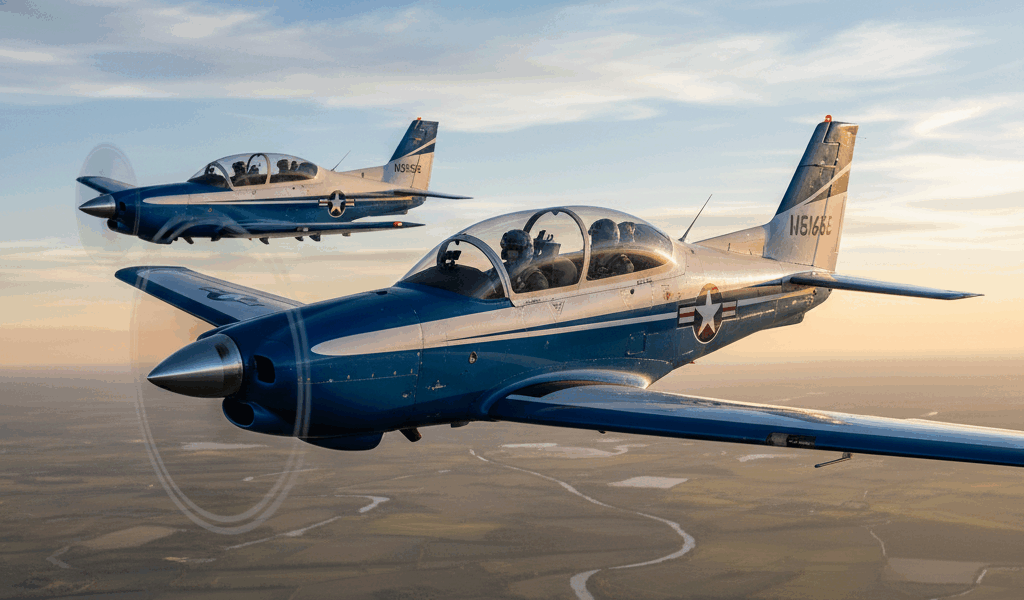
Understanding the T-6 Texan II Primary Trainer
Primary training aircraft have gotten complicated with all the modern systems and digital cockpits flying around military aviation these days.
The T-6 Texan II serves as the backbone of military pilot training for both the U.S. Air Force and Navy regardless of what you’ll eventually fly. This turboprop trainer has shaped more military aviators than any other aircraft in the current inventory, and nearly everyone who gets their wings started here.

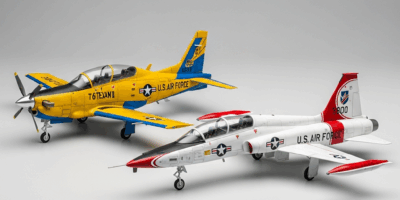
Built by Beechcraft, the T-6 replaced aging T-37 jets in Air Force undergraduate pilot training when those old tweeters finally aged out. The aircraft offers a pressurized cockpit, digital glass displays, and performance characteristics that prepare students for advanced jet training in ways the old platforms never could.
Probably should have led with this section, honestly. Student pilots appreciate the T-6’s forgiving flight characteristics during early training phases when mistakes are expected. The aircraft responds predictably to control inputs while still demanding precision and attention to detail that will matter later. Instructors can introduce increasingly complex maneuvers as student skills develop without worrying about getting into trouble.
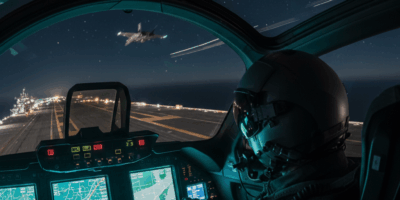
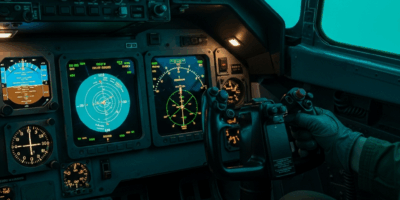
That’s what makes the cockpit layout so valuable—it mirrors modern fighter configurations from day one. Students learn to manage multiple display screens, heads-up displays, and hands-on-throttle-and-stick controls that will follow them throughout their military aviation careers no matter what platform they end up in.
With a maximum speed of 316 knots and a service ceiling of 31,000 feet, the T-6 provides a genuine taste of military aviation performance rather than just basic flying. Students experience aerobatic maneuvers, instrument flying, and formation work that civilian training rarely includes and certainly doesn’t require.
The ejection seat adds another layer of realism to training that students take seriously. Student pilots learn emergency procedures knowing that the aircraft offers a genuine escape option if situations become unrecoverable—because sometimes they do.
Approximately 18 months of T-6 training transforms civilians into competent military aviators ready for specialized advanced training in fighters, bombers, or transport aircraft depending on where the needs of the service take them.

Leave a Reply