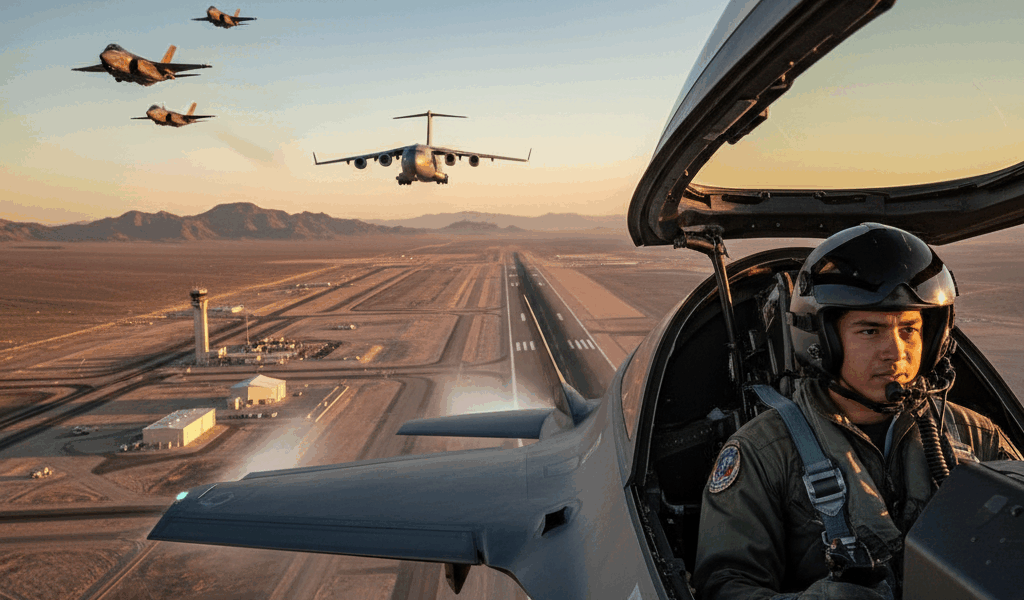
How Simulator Training Saves Lives and Money
Flight simulation has gotten complicated with all the advanced visuals and motion systems flying around modern training facilities.
Modern military flight simulators have revolutionized pilot training by providing realistic combat scenarios without the risks and costs of actual flight that would bankrupt any air force. These sophisticated machines prepare pilots for situations too dangerous to practice in real aircraft—because some lessons you can only learn once the hard way.
Full-motion simulators replicate every aspect of flight with remarkable accuracy that surprises pilots the first time they experience it. Hydraulic systems move the cockpit through six degrees of freedom while high-resolution displays create immersive visual environments that your brain accepts as real. Pilots report that intense simulator sessions feel indistinguishable from actual flight in all the ways that matter.
Probably should have led with this section, honestly. The training advantages extend beyond simple cost savings that accountants love. Instructors can pause scenarios mid-fight, rewind critical moments to see exactly what went wrong, and analyze student performance in ways completely impossible during actual flight. Students learn from mistakes without risking aircraft or lives—and they can make the same mistake ten times until they finally get it right.
That’s what makes emergency procedure training so valuable in simulation. Pilots practice engine failures, hydraulic malfunctions, and combat damage without ever putting themselves in genuine danger. Repetition builds the muscle memory needed when real emergencies occur and your brain needs to act faster than you can think.
Combat scenarios allow pilots to face simulated adversaries using realistic threat systems that would be impossible to replicate safely in actual airspace. Students experience missile launches, radar tracking, and electronic warfare in controlled environments where lessons can be repeated until mastered completely.
Operating costs make simulators even more attractive to people managing budgets. A single hour of F-35 flight costs approximately $36,000 in fuel, maintenance, and wear on airframes that need to last decades. The same hour in a simulator costs a fraction of that amount while providing equivalent training value for many scenarios where physical flight adds nothing.
Simulator time now comprises a significant portion of pilot currency requirements, ensuring that aviators maintain proficiency while preserving expensive aircraft for essential missions that actually require getting airborne.

Leave a Reply