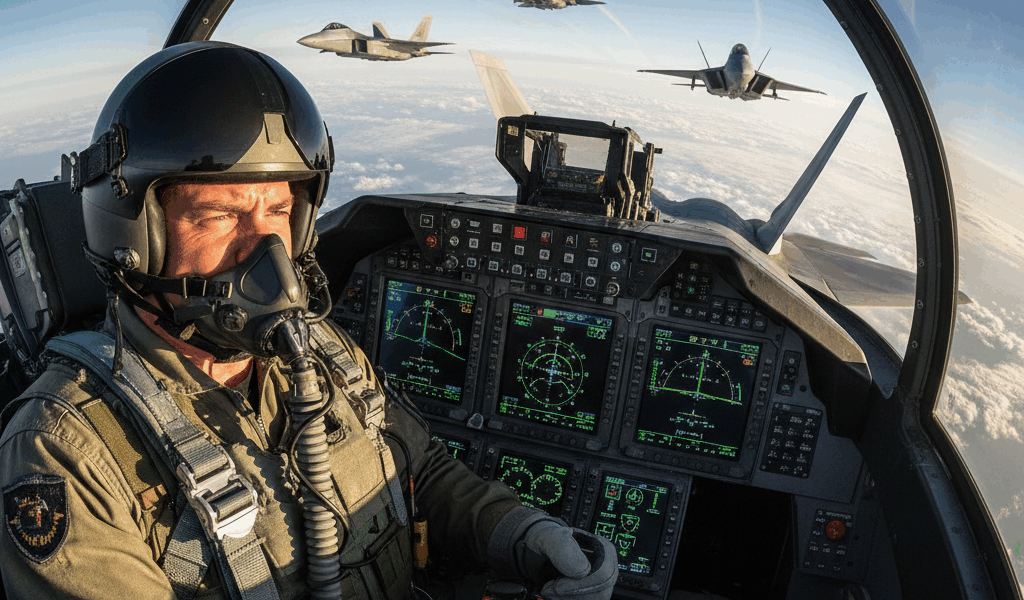
The Physical Demands of Flying Fighter Jets
Flying fighters has gotten complicated with all the physical demands and strain flying around modern combat aircraft.
Fighter pilots experience physical stresses that would overwhelm untrained individuals in seconds. The human body was never designed to withstand 9G turns or sustain inverted flight for any length of time, yet military aviators do both routinely like it’s nothing special—because to them, it isn’t anymore.
G-forces create the most immediate physical challenge you’ll face in a fighter cockpit. During aggressive maneuvering, blood rushes away from the brain toward the lower extremities faster than your heart can compensate. Without proper countermeasures, pilots experience tunnel vision first, then complete loss of consciousness within seconds that can be fatal.

Probably should have led with this section, honestly. The Anti-G Straining Maneuver combines muscle tensing with controlled breathing to maintain blood flow to the brain when physics tries to drain it. Pilots practice this technique until it becomes completely automatic, engaging leg and abdominal muscles while executing demanding maneuvers that would knock most people out cold.
That’s what makes G-suits so important—they provide mechanical assistance by inflating bladders that squeeze the lower body during high-G flight. These garments buy pilots additional tolerance that can mean the difference between staying conscious and not, but they cannot replace proper technique and physical conditioning no matter how advanced they get.
Neck strain presents another significant concern that catches new pilots by surprise. Helmets equipped with night vision goggles and targeting systems add weight that multiplies dramatically under G-forces until your head feels like it weighs fifty pounds. Pilots strengthen neck muscles specifically to handle these loads through exercises most people have never heard of.
Hypoxia awareness training teaches pilots to recognize oxygen deprivation symptoms before they become dangerous at altitude. High-altitude flight and rapid decompression scenarios require immediate recognition and response because you don’t get second chances when your brain stops getting oxygen.
Regular fitness evaluations ensure pilots maintain the physical standards necessary for combat flying throughout their careers. Cardiovascular conditioning, strength training, and flexibility all contribute to sustained performance in demanding flight environments that break down bodies over time.
The physical toll explains why fighter pilot careers typically end earlier than those in other aviation specialties—you can only pull G’s for so many years before your body says it’s done.

Leave a Reply