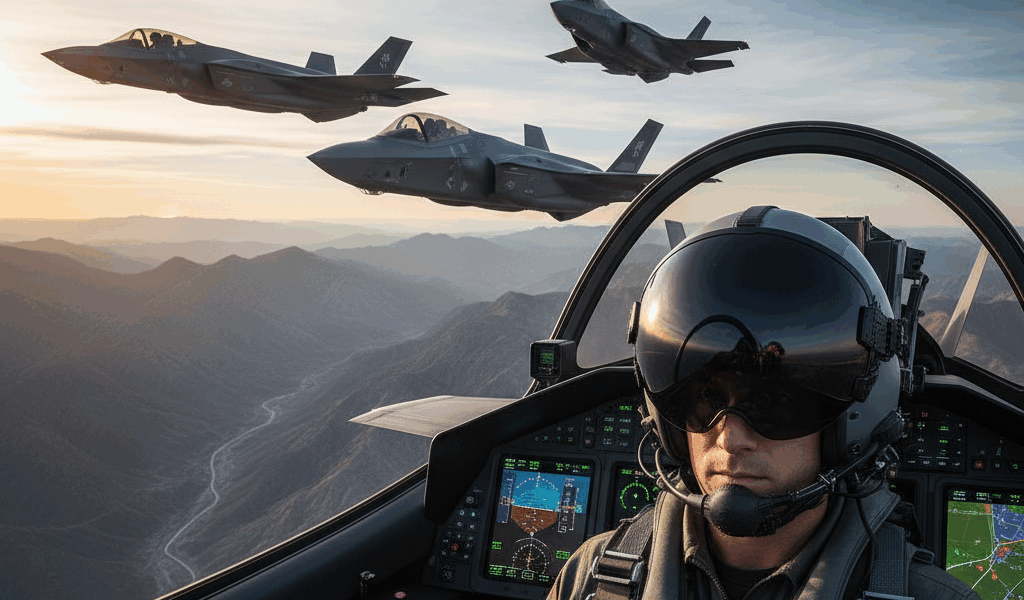
Five Essential Skills Every Military Pilot Must Develop
Military pilot skills have gotten complicated with all the systems and tactical demands flying around modern cockpits.
Beyond stick-and-rudder proficiency that everyone expects, military pilots must master a diverse skill set that separates competent aviators from exceptional ones who get the hard missions. These capabilities develop through years of training and operational experience that can’t be rushed.
Situational Awareness stands paramount above everything else. Pilots must simultaneously track their own aircraft state, wingman positions, threats in all directions, terrain below, weather ahead, and mission objectives that keep changing. This mental picture requires constant updating and ruthless prioritization that never lets up—you can’t focus on one thing and ignore the rest.
Decision Making Under Pressure separates survivors from statistics in ways that become painfully clear when things go wrong. Combat flying offers no time for lengthy deliberation or second-guessing yourself. Pilots learn to process information rapidly and commit to action knowing that indecision often proves more dangerous than imperfect choices made quickly.
Probably should have led with this section, honestly. Communication Skills ensure mission success more than most people realize. Clear, concise radio calls convey critical information without cluttering frequencies that everyone needs. Pilots develop a specialized vocabulary that transmits maximum information in minimum time—every word matters when seconds count.
Systems Management keeps sophisticated aircraft performing optimally when you’re pushing them hard. Modern military jets contain hundreds of interconnected systems requiring constant monitoring even while you’re doing everything else. Pilots must understand not just what each system does in isolation, but how failures cascade through related components when something breaks.
That’s what makes Tactical Thinking so important—it provides the mental framework for combat operations that keeps you ahead of the enemy. Understanding enemy capabilities, exploiting weaknesses they might not know they have, and positioning for advantage require chess-like thinking at fighter-jet speeds. You’re playing a game where losing means dying.
These skills develop progressively through structured training, mentorship from experienced aviators who’ve been there, and accumulated flight hours that transform theoretical knowledge into instinctive response. There are no shortcuts.
The best military pilots never stop refining these fundamental capabilities throughout their careers, even when they’ve got thousands of hours in the jet.

Leave a Reply