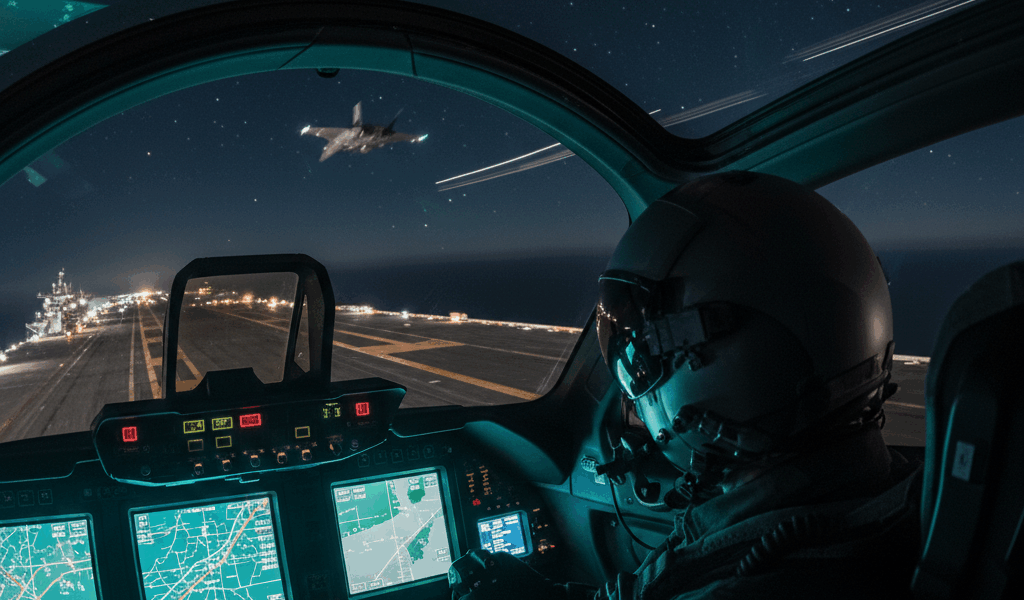
Inside the Cockpit of the F-35 Lightning II
Fighter cockpits have gotten complicated with all the integrated systems and sensor fusion technology flying around fifth generation aircraft.
The F-35 Lightning II cockpit represents the most advanced human-machine interface ever installed in a combat aircraft, and it’s not even close. Gone are the dozens of switches and gauges that cluttered previous generation fighters and overwhelmed new pilots. In their place, pilots find a streamlined workspace designed to reduce workload while maximizing situational awareness in ways older jets can’t match.

The Glass Cockpit Revolution
Probably should have led with this section, honestly. A single 20-inch by 8-inch panoramic touchscreen dominates the F-35 instrument panel, and it’s unlike anything that came before. This display replaces the multiple screens and dedicated instruments found in older aircraft that required pilots to scan constantly. Pilots customize the layout to show relevant information for each mission phase, reducing visual clutter during critical moments when focus matters most.
The touchscreen accepts input even through flight gloves, allowing pilots to manipulate displays without removing protective equipment that keeps them alive. Voice commands provide an additional input method that works surprisingly well, though most pilots prefer tactile interaction during high-G maneuvering when precision matters.
Helmet-Mounted Display System
That’s what makes the F-35 helmet so revolutionary—it projects critical flight data directly onto the visor, eliminating the traditional heads-up display mounted on the dashboard that limited where pilots could look. Pilots see airspeed, altitude, heading, and targeting information regardless of where they turn their heads.
Distributed aperture system cameras feed real-time imagery to the helmet, effectively allowing pilots to see through the aircraft structure itself. Looking down shows the ground beneath the aircraft as if the floor were transparent. Looking behind reveals threats approaching from six o’clock without craning your neck. This capability fundamentally changes how pilots perceive their environment in ways that take adjustment.
Sensor Fusion
The F-35’s computers combine data from radar, electronic warfare systems, infrared sensors, and datalinks into a unified picture that older pilots would have killed for. Pilots no longer interpret raw sensor data from multiple displays trying to build a mental picture. Instead, they see processed information showing friend, foe, and unknown contacts on a single tactical display that does the thinking for you.

Reduced Pilot Workload
Automation handles many tasks that previously demanded constant pilot attention in older aircraft. The aircraft manages defensive systems automatically, optimizes weapon selection based on the situation, and coordinates with other platforms through secure datalinks without manual input. This automation frees cognitive resources for tactical decision-making at the level that actually wins fights.
Critics worried that increased automation would reduce pilot skills and create lazy aviators. Experience has shown the opposite happens in practice. F-35 pilots focus on higher-level thinking because they spend less time managing aircraft systems, which makes them more effective in combat rather than less.
The F-35 cockpit demonstrates how thoughtful design can enhance human performance in complex environments that would overwhelm anyone in an older jet. Future aircraft will undoubtedly build upon these innovations as military aviation continues evolving toward even more integrated systems.



Leave a Reply