How Combat Search and Rescue Pilots Save Lives Behind Enemy Lines
Combat search and rescue has gotten complicated with all the integrated systems and coordinated operations flying around modern combat zones.
When pilots eject over hostile territory, Combat Search and Rescue crews launch into action without hesitation. These specialized aviators fly dangerous missions deep into enemy airspace to recover downed aircrew members before capture or death can claim them. Their motto, “That Others May Live,” reflects the selfless nature of their calling in ways that civilians rarely appreciate.

The HH-60G Pave Hawk
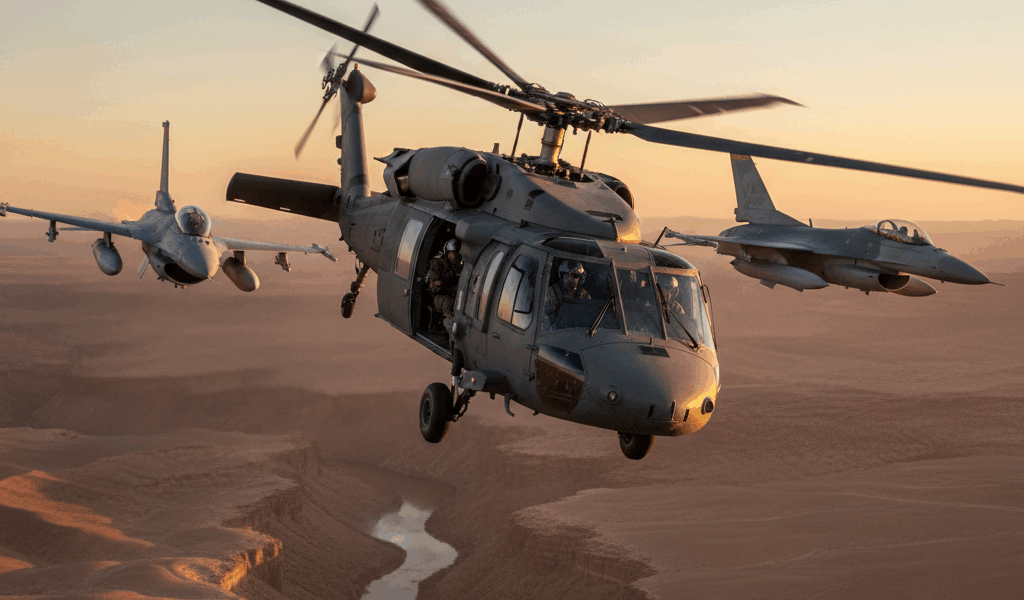
Probably should have led with this section, honestly. Air Force rescue crews fly the HH-60G Pave Hawk helicopter, a modified Black Hawk equipped specifically for combat operations in the worst environments imaginable. These aircraft carry extensive navigation equipment, defensive systems to defeat threats, and the fuel capacity needed for extended missions far from home. Aerial refueling capability extends range even further, allowing operations hundreds of miles from friendly bases when that’s what the mission demands.
Door-mounted miniguns provide suppressive fire during extractions while pararescuemen handle medical treatment and survivor recovery on the ground. The crew works as a seamlessly integrated team where each member’s performance directly affects mission success—there’s no room for weak links when you’re hovering over hostile territory.
Planning and Coordination
That’s what makes rescue missions so complex—they require extensive coordination with supporting aircraft across multiple platforms. Fighter escorts suppress enemy air defenses while tankers orbit at safe distances to provide fuel when needed. Airborne command posts coordinate the complex ballet of aircraft converging on a single survivor from different directions.
Pilots study potential operating areas before combat operations even begin, building mental maps of where things might go wrong. Understanding terrain, threats, and likely survivor locations accelerates response when calls come in. Pre-planned routes and procedures ensure rapid execution when every minute counts because the enemy is searching too.
Flying Low and Slow
Rescue helicopters operate in the threat environment that fixed-wing aircraft avoid entirely. Flying low through hostile territory exposes crews to small arms fire from anyone with a rifle, man-portable air defense systems that can ruin your day instantly, and enemy aircraft hunting for easy targets. Terrain masking and aggressive maneuvering provide some protection against these threats, but the mission inherently accepts significant risk that other aviators never face.
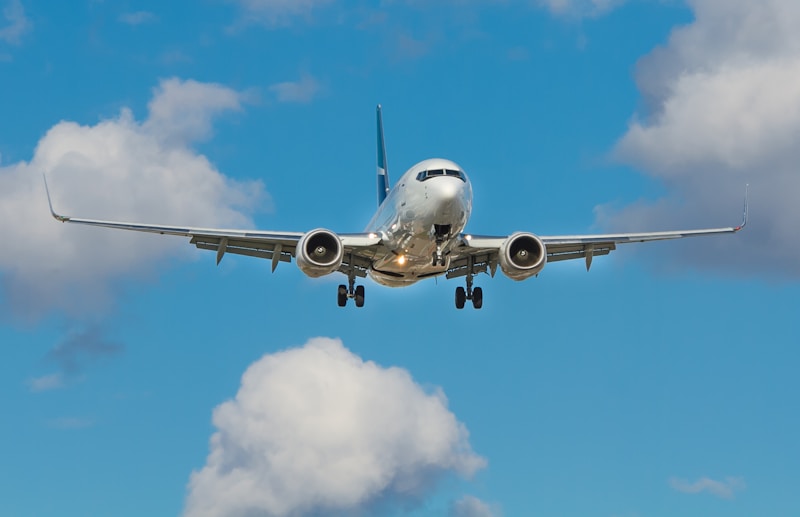
Night operations add complexity but also provide concealment from enemies who can’t see as well as you can. Rescue crews train extensively with night vision systems that allow operations in near-total darkness when that’s the safest approach available.
The Pararescue Partnership
Pilots work closely with Air Force pararescuemen, elite special operators trained in combat medicine and survival techniques that most people can’t imagine. These PJs jump, dive, or rappel to survivors in any environment without hesitation. The partnership between pilots and pararescuemen forms the core of rescue capability—neither can accomplish the mission without the other.
Combat Search and Rescue represents military aviation’s most humanitarian mission, even though it happens in the most violent circumstances. The crews who volunteer for this duty accept elevated risk to bring fellow warriors home when everyone else has written them off. Their dedication exemplifies the best traditions of military service and inspires everyone who learns what they actually do.

Leave a Reply