The Future of Military Aviation and What Pilots Should Expect
Military aviation has gotten complicated with all the new technology and autonomous systems flying around these days.
Military aviation stands at an inflection point that most people don’t fully appreciate yet. Artificial intelligence, autonomous systems, and next-generation platforms are reshaping how air forces will operate in ways that seemed like science fiction just ten years ago. Pilots entering service today will experience more fundamental change than any generation since the transition from propellers to jets back in the late 1940s. Understanding these trends helps aspiring aviators prepare for careers that may look dramatically different from today’s operations.

Autonomous Wingmen and Collaborative Combat Aircraft
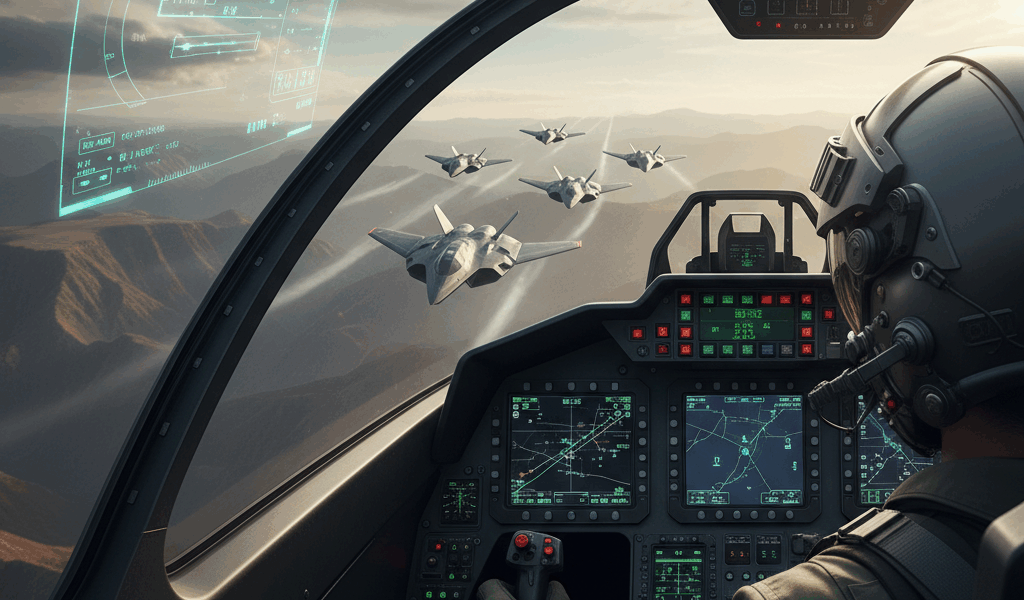
Probably should have led with this section, honestly. The most immediate change involves teaming manned fighters with autonomous combat aircraft that fly alongside human pilots. Programs like the Air Force’s Collaborative Combat Aircraft aim to pair each manned fighter with multiple drone wingmen that extend sensing range far beyond what one aircraft can cover, carry additional weapons beyond internal bay capacity, and absorb enemy fire that might otherwise target human pilots.
These autonomous platforms will not replace human pilots anytime soon, but they will fundamentally change what pilots actually do in combat. Rather than directly controlling every aspect of flight and weapons employment like pilots do today, future fighter pilots will manage teams of autonomous systems that execute commands while adapting to tactical situations on their own. The pilot becomes a tactical commander rather than simply an aircraft operator, which is a massive shift in how we think about the job.
Training programs are already evolving to prepare pilots for this new role they’ll be filling. Simulation increasingly emphasizes multi-platform coordination and higher-level tactical decision-making across distributed forces. Stick-and-rudder skills remain essential and always will, but mission management capabilities grow in importance with each passing year.
Sixth-Generation Fighter Development
The Next Generation Air Dominance program will produce aircraft fundamentally different from today’s fighters in ways most people can’t imagine. While specific capabilities remain classified for good reason, publicly available information suggests revolutionary changes in propulsion, stealth, and sensor integration that make the F-35 look dated by comparison.
That’s what makes sixth-generation platforms so interesting—they may be optionally manned, capable of operating with or without human pilots depending on mission requirements. This flexibility allows human judgment for complex scenarios where ethical decisions matter while enabling autonomous operation in environments too dangerous or mundane for human occupation.
Advanced materials and manufacturing techniques will produce aircraft with capabilities impossible using current technology available today. Additive manufacturing enables complex geometries that improve aerodynamic performance beyond what traditional methods allow. New materials withstand temperatures and stresses that would destroy conventional structures in seconds.
Artificial Intelligence Integration
Artificial intelligence will increasingly handle tasks that currently demand human attention every second of flight. Already, AI systems can conduct air-to-air combat at superhuman levels in simulated environments, beating experienced human pilots consistently. As these systems mature and prove themselves, they will assume responsibility for routine tactical decisions while humans focus on strategic judgment and ethical oversight that machines can’t handle.
Machine learning accelerates data analysis beyond what human capability can match. Future systems will identify threats, predict enemy actions, and recommend responses faster than human cognition allows under any circumstances. Pilots will supervise these recommendations rather than independently developing solutions from scratch, which changes the cognitive demands of the job entirely.
This transition raises profound questions about the role of human judgment in lethal force employment that we haven’t fully worked out yet. Policy decisions about appropriate AI autonomy will shape how pilots interact with their systems going forward. The balance between speed and human oversight remains actively debated at the highest levels of defense policy.
Hypersonic and Space Operations
Hypersonic weapons and platforms introduce new domains where traditional aviation concepts may not apply at all. Vehicles traveling at Mach 5 and above experience physics dramatically different from conventional aircraft flying at normal speeds. Pilots operating in this regime will require new skills and conceptual frameworks that don’t exist in current training pipelines.
Space operations increasingly intersect with atmospheric aviation in ways nobody predicted twenty years ago. Reusable spacecraft blur the line between orbital and aerial operations. Future pilots may transition seamlessly between atmospheric flight and space operations during single missions, which sounds crazy but is closer than most people realize.
The Space Force’s evolution creates new career paths that aviation-minded officers should seriously consider. While current Space Force operations focus on satellites and ground stations, future capabilities may require rated officers with hybrid aviation and space qualifications that don’t exist yet.
Implications for Career Planning
Pilots entering service today should expect continuous adaptation throughout their careers no matter which airframe they start in. The platforms they initially fly may become obsolete before they reach senior ranks. Success will require embracing change rather than resisting it, which is easier said than done for some personalities.
Technical literacy becomes increasingly important as systems grow more complex every year. Understanding artificial intelligence concepts, cybersecurity fundamentals, and data analytics will complement traditional aviation knowledge in ways that matter for career advancement. Continuous learning must extend beyond purely aviation domains if you want to stay relevant.
Leadership skills remain eternally valuable even as technology evolves around us. Humans will continue making critical decisions about when and how to employ military force regardless of what systems we develop. Developing sound judgment, ethical reasoning, and communication skills prepares pilots for responsibilities that technology cannot assume and probably never should.
The future of military aviation promises excitement, challenge, and opportunity for those prepared to embrace change rather than fear it. Pilots who combine excellent flying skills with technological adaptability and sound judgment will thrive regardless of how specific platforms evolve. The fundamental purpose of military aviation remains unchanged even as the means of accomplishing it transforms dramatically around us.


Leave a Reply