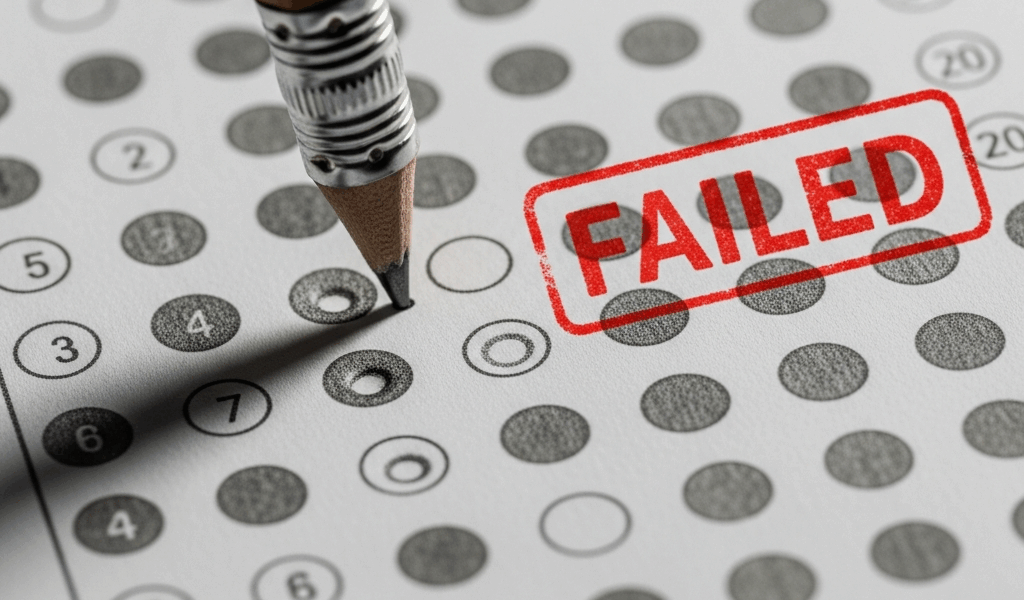
The minimum passing Army SIFT score is 40. For the 153A Rotary Wing Aviator warrant-officer path, Army recruiting lists 40 as the non-waivable minimum and 55 or higher as “most preferred.” A 40 makes you eligible on this requirement; it does not guarantee selection.
Retest rule: If you score 40 or higher, you are not authorized to retake the SIFT simply to improve the score. If you score below 40, one retest is permitted after at least 45 days. Only two total attempts are allowed.
Army SIFT score requirements at a glance
| Question | Current Army answer |
|---|---|
| Minimum passing score | 40 |
| 153A “most preferred” score | 55 or higher |
| Can a passing score be retaken? | No, not merely to improve it |
| Can a failing score be retaken? | Once, on or after the 45th day |
| Maximum attempts | Two total |
| Does 40 guarantee selection? | No |
What is a good SIFT score?
A score of 40 is passing. For applicants pursuing 153A, the Army Warrant Officer Recruiting page currently identifies 55+ as the historical “most preferred” level. That makes 55 a useful competitive reference point, but it is not a published guarantee or universal board cutoff.
The same Army page evaluates other attributes, including GT score, age, service history, leadership, evaluations, education, physical fitness, recommendations and civilian aviation credentials. Boards select a complete applicant, not a SIFT number in isolation.
Does your SIFT score stay with you?
Army recruiting guidance says that once you pass, the score becomes your score for life. Because a qualifying score cannot ordinarily be retaken, applicants should prepare before the first attempt rather than treating it as a practice run.
Keep the official score report and follow the application checklist for your accession path. Do not rely on an unofficial online calculator or practice-test estimate as proof of qualification.
What happens if you score below 40?
Army Human Resources Command states that an examinee may take the SIFT no more than twice. A second attempt can be administered on or after the 45th day following the first attempt. The required waiting interval cannot be waived.
If the second score is also below 40, no third attempt is authorized under the published policy. Confirm scheduling and eligibility with the Army testing office or recruiter responsible for your application.
Can you retake a passing SIFT score?
No ordinary retest is authorized after a qualifying score of 40 or above. This matters for applicants who pass with a score below the “most preferred” reference: the published policy does not allow repeated attempts to chase a higher number.
An exception-to-policy process should not be assumed to exist for score improvement. HRC’s published retest page states that additional testing is not authorized once an examinee achieves a qualifying score.
What the SIFT measures
Fort Novosel describes the SIFT as measuring several aptitudes relevant to Army flight training, including:
- mathematical skills;
- reading comprehension;
- mechanical concepts and simple machines;
- mental rotation and aircraft orientation;
- rapid pattern recognition;
- aviation terminology and aircraft components;
- basic aerodynamic principles; and
- basic flight rules and regulations.
Use the current official SIFT manual and authorized testing resources for the exam structure. Commercial preparation material can supplement—but should not replace—the official description.
How SIFT fits into a 153A application
Passing the SIFT satisfies one prerequisite. The Army’s 153A page also lists requirements involving age, GT score, a Class 1 flying-duty medical examination approved by the U.S. Army Aeromedical Activity, letters of recommendation and the complete warrant-officer application packet.
For current 153A recruiting, the published page lists:
- age 18–32 at board selection, with waiver provisions identified by the Army;
- GT score of at least 110;
- SIFT score of at least 40;
- an approved Class 1 flight physical; and
- the required recommendation and application documents.
Requirements vary for active-duty, civilian WOFT, ROTC and other applicant categories. Use the page for your specific path.
How to prepare without wasting an attempt
- Start with the official exam description. Identify every tested aptitude rather than studying aviation facts alone.
- Diagnose weak areas. Separate math, mechanical comprehension, spatial orientation, reading and aviation knowledge.
- Practice under time limits. Familiarity without pacing is not enough.
- Review errors by category. Track whether mistakes come from knowledge gaps, rushed reading or spatial confusion.
- Confirm testing logistics. Bring the required documents and follow the authorized test site’s instructions.
- Do not test casually. A passing score becomes permanent under the published policy.
Frequently asked questions
What SIFT score do you need to become an Army pilot?
The published minimum is 40. Applicants must also satisfy the other medical, age, aptitude and application requirements for their path.
Is 50 a good SIFT score?
It is ten points above the passing minimum. The 153A recruiting page identifies 55+ as “most preferred,” but boards consider the complete application.
Is 60 a good SIFT score?
It exceeds both the 40 minimum and the Army’s published 55+ “most preferred” reference for 153A applicants. It still does not guarantee selection.
Can you retake the SIFT after passing?
No ordinary retest is authorized after a score of 40 or higher.
How long must you wait to retake a failed SIFT?
At least 45 days after the first attempt. Only one retest is permitted.
Does flight experience replace the SIFT?
No. Civilian aviation credentials may strengthen an application, but the 153A prerequisite still lists a qualifying SIFT score.
Official sources
- U.S. Army Warrant Officer Recruiting: 153A Rotary Wing Aviator prerequisites
- Army HRC: personnel-testing retest policy
- Fort Novosel: Army aviation cadets and candidates
- U.S. Army Recruiting: civilian WOFT applicants
Requirements can change. The current Army recruiting page, testing authority and application instructions control.
The SIFT is one prerequisite, not flight training itself. Review the 2026 Army flight-school timeline for UH-72 Common Core, advanced-airframe training and current backlog caveats.

Leave a Reply