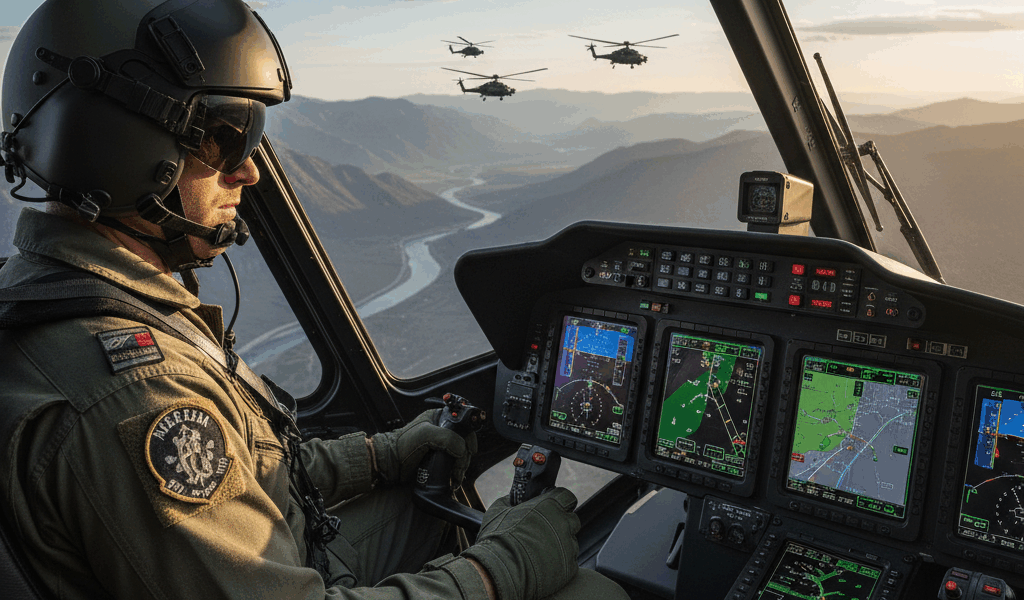
Helicopter flying has gotten complicated with all the different airframes and mission sets flying around military rotary-wing aviation today.
Military helicopter pilots operate in some of the most demanding flight environments imaginable that fixed-wing pilots never experience. From search and rescue in treacherous terrain to combat assault operations under fire, rotary-wing aviators face unique challenges that set them apart in military aviation and create a brotherhood unlike any other.
Army Aviation Path
Probably should have led with this section, honestly. The Army offers the most helicopter pilot positions among all branches by a significant margin. Warrant Officer candidates attend Warrant Officer Candidate School before moving to Fort Novosel (formerly Fort Rucker) for Initial Entry Rotary Wing training that shapes everything that follows. This pipeline is open to enlisted soldiers and civilians alike, making it a popular route to a flying career for people who might not have college degrees.
That’s what makes Army aviation attractive to so many—training begins with the UH-72 Lakota for instrument and basic helicopter skills before transitioning to the aircraft for their specific assignment. Options include the AH-64 Apache attack helicopter that hunts tanks, UH-60 Black Hawk utility helicopter that moves troops and supplies, and CH-47 Chinook heavy lift helicopter that can carry almost anything anywhere.
Navy and Marine Corps Helicopter Training
Naval aviators selecting helicopters train in the TH-57 Sea Ranger at Whiting Field before advancing to their fleet aircraft that they’ll fly operationally. Marine pilots may fly AH-1Z Vipers, UH-1Y Venoms, or CH-53K King Stallions depending on assignment and community needs at the time they complete training.
Operational Challenges
Helicopter missions often occur in the worst conditions that fixed-wing pilots actively avoid and would cancel for. Night operations using night vision goggles, low-altitude flight to avoid detection by enemies, and landing in confined areas without prepared runways are routine rather than exceptional. Medical evacuation missions fly regardless of weather when lives depend on rapid transport—there’s no postponing until conditions improve.
Combat helicopter pilots face direct enemy engagement in ways that make their job uniquely dangerous. Attack helicopter crews hunt tanks and enemy positions with devastating weapons. Assault helicopter crews deliver troops under fire and extract wounded personnel from hostile territory where anyone could be shooting at them. These missions demand both flying precision and tactical judgment that only comes with experience.
Career Progression
Helicopter pilots typically progress from copilot to pilot in command, then to instructor pilot or standardization positions as they gain experience. Many transition to civilian careers in emergency medical services, corporate aviation, or offshore oil support, where the specialized skills of helicopter operations command premium salaries that reflect the difficulty of what they do.
Rotary-wing missions can make night visual cues especially consequential near terrain and landing areas. Review the fundamentals in our NVG flying guide for military pilots.


Leave a Reply