Flying Combat Missions in Afghanistan and What Pilots Learned
Combat aviation has gotten complicated with all the lessons learned and tactical evolution flying around from twenty years of continuous operations.
Two decades of combat operations in Afghanistan produced a generation of military pilots with unprecedented experience in close air support, precision strike, and coordination with ground forces in ways no simulation can replicate. These veterans transformed theoretical tactics into battle-tested procedures that will shape military aviation doctrine for decades to come whether the Pentagon acknowledges it or not.

The Unique Afghan Operating Environment
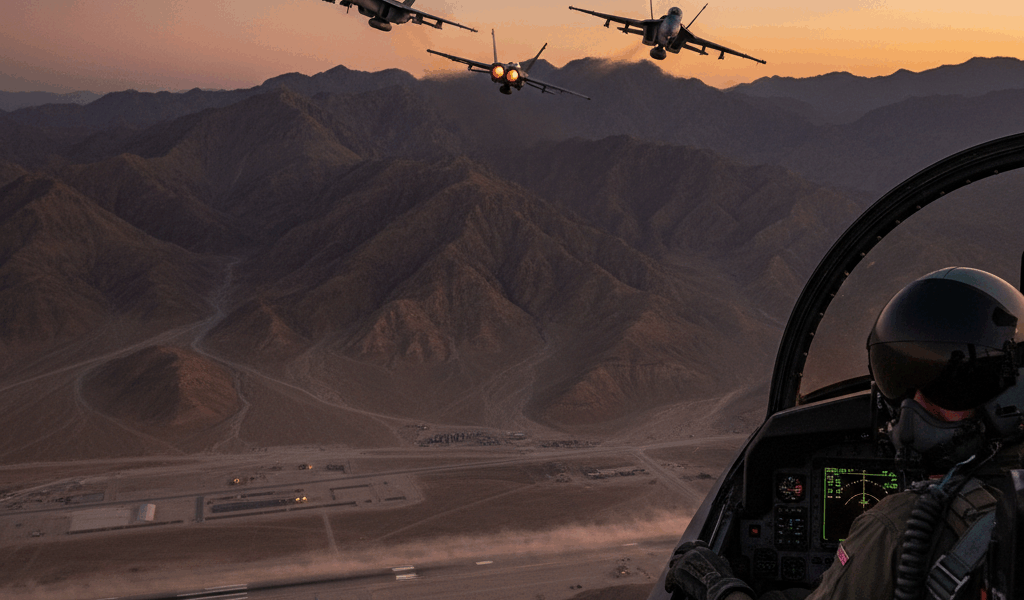
Probably should have led with this section, honestly. Afghanistan presented challenges unlike any previous conflict American pilots faced. High-altitude airfields reduced aircraft performance during hot summer months when density altitude made every takeoff feel marginal. Mountainous terrain created radar shadows and restricted low-level approaches to valleys that felt like flying through tunnels. Dust conditions degraded engines faster than anyone predicted and obscured landing zones at the worst possible moments. Pilots learned to adapt their stateside training to an environment that demanded constant innovation just to survive.
The enemy presented asymmetric challenges as well that nobody really trained for beforehand. Taliban fighters possessed neither aircraft nor sophisticated air defenses, but they understood how to exploit Western reluctance to cause civilian casualties with devastating effectiveness. Combat became an exercise in identification and discrimination rather than raw firepower application, which is a completely different mental game than what most pilots prepared for.
Rules of engagement evolved continuously throughout the conflict as commanders reacted to events on the ground. Positive identification requirements before weapons release became increasingly stringent with each unfortunate incident. Pilots learned to conduct reconnaissance as much as strike operations, building deep understanding of ground situations before committing ordnance to targets.
Close Air Support Excellence
That’s what makes Afghanistan special in aviation history—it refined close air support tactics to unprecedented precision levels. Ground forces came to expect aircraft overhead within minutes of contact, and those aircraft delivered weapons within meters of friendly positions without hesitation. The partnership between pilots and joint terminal attack controllers reached new levels of integration that hadn’t existed before.
A-10 pilots excelled in the close air support mission in ways that vindicated everyone who fought to keep that aircraft in service. Their aircraft’s long loiter time and heavy armament proved ideally suited to protecting ground forces in extended engagements that lasted hours. The Warthog’s reputation grew with each successful show of force that dispersed enemy fighters without dropping ordnance—sometimes just the sound of that gun was enough.
Fast jet pilots adapted their tactics for an unconventional war that looked nothing like what they trained for. F-15E and F-16 crews learned to work at altitudes and airspeeds that maximized communication with ground controllers while maintaining fuel-efficient orbits for hours at a time. The transition from air-to-air training mindsets to ground support required mental flexibility that became a generational strength for everyone who went through it.
Precision Munitions Revolution
Afghanistan accelerated precision munitions development and employment faster than any peacetime program ever could. Laser-guided bombs gave way to GPS-guided weapons that maintained accuracy regardless of weather conditions or target marking availability. Small diameter bombs allowed single aircraft to engage multiple targets with minimal collateral effects that kept lawyers happy and civilians safe.
The Hellfire missile became synonymous with precision strike in the public consciousness, its small warhead limiting damage while providing lethal effects against individuals and vehicles with surgical accuracy. Pilots learned to select weapons based on tactical effects rather than simply dropping the largest available bomb because they could—a massive shift in thinking.
Coordination between manned aircraft and remotely piloted vehicles improved continuously throughout the conflict. Predator and Reaper drones provided persistent surveillance that informed manned aircraft employment in real time. The integration of manned and unmanned systems became routine rather than exceptional, which set the stage for everything coming next in military aviation.
Communications and Coordination
Complex airspace demanded sophisticated deconfliction and coordination that would have been impossible in earlier conflicts. Dozens of aircraft might operate simultaneously over a single engagement area without running into each other. Pilots developed expertise in rapid information sharing that prevented fratricide while maximizing combat effects on targets that deserved them.
Joint terminal attack controllers became the essential link between air and ground power in ways that can’t be overstated. Pilots learned that controller skill varied dramatically depending on training and experience, and they adjusted their tactics accordingly on the fly. Building relationships with specific controllers improved effectiveness and safety for both parties in ways that saved lives.
Real-time video downlink transformed pilot-controller interaction completely. Ground forces could see exactly what pilots saw through their targeting pods, enabling shared understanding of target areas that eliminated guesswork. This common picture reduced errors and accelerated decision-making under pressure when seconds mattered.
Lessons for Future Conflicts
Afghanistan demonstrated that air power alone cannot achieve political objectives no matter how precise your weapons get. Pilots learned humility about what their weapons could actually accomplish while developing expertise in supporting ground forces effectively through integration rather than independence. The experience produced a generation of aviators who understand joint operations at an intuitive level that can’t be taught in classrooms.
High-altitude, high-temperature operations exposed aircraft performance limitations that informed subsequent procurement decisions across every service. The need for long loiter time, precision weapons, and robust communications shaped requirements for next-generation platforms in ways civilians never see documented.
Perhaps most importantly, Afghanistan taught pilots about the human dimension of combat that sanitized training never conveys. Seeing ground forces in contact on video, hearing stress in controller voices over the radio, and understanding the consequences of weapons employment created warriors who appreciate the weight of their responsibilities. These lessons cannot be replicated in peacetime training no matter how realistic the simulations get.
The pilots who flew combat missions over Afghanistan brought home experience that will guide military aviation for the next generation at minimum. Their hard-won knowledge ensures that future conflicts will benefit from lessons learned in the mountains and valleys where they proved themselves under fire when it actually mattered.



Leave a Reply