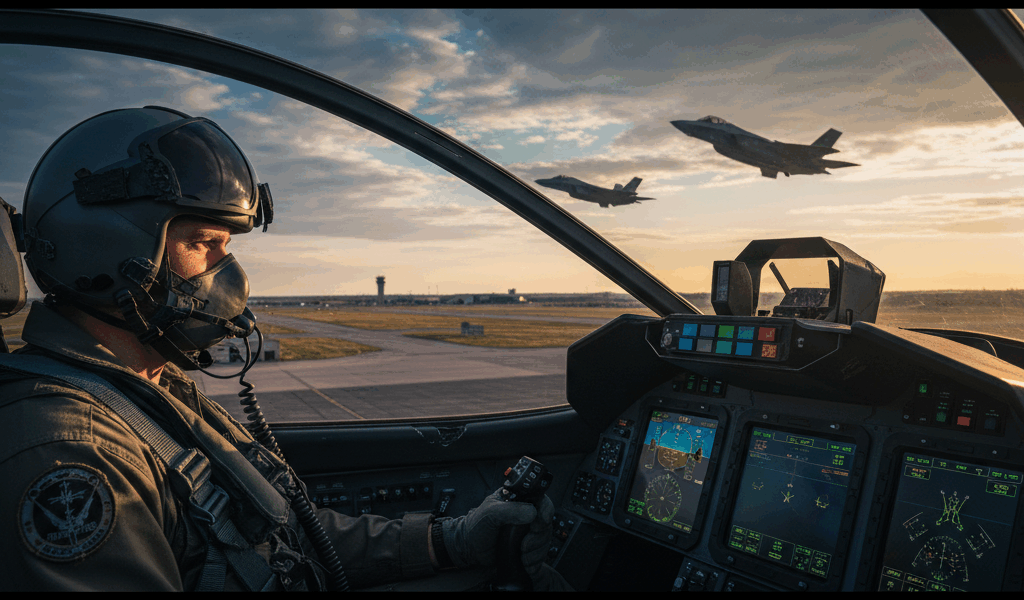
The Complete Guide to Becoming an Air Force Fighter Pilot
Becoming a fighter pilot has gotten complicated with all the requirements and competition flying around today’s military aviation world.
Becoming an Air Force fighter pilot represents one of the most competitive and demanding career paths available to young Americans who dream of flying fast jets. Fewer than one percent of those who begin the journey ultimately strap into a front-line fighter cockpit, which should tell you something about the odds. Understanding the complete process helps aspiring aviators prepare effectively and set realistic expectations for the challenges ahead.

Meeting Basic Eligibility Requirements
Probably should have led with this section, honestly. Before applying for pilot training, candidates must meet fundamental eligibility criteria that eliminate many applicants before serious evaluation even begins. Age requirements specify that pilots must begin undergraduate pilot training before their 33rd birthday, though exceptions exist for certain prior-service members who bring valuable experience.
Educational requirements mandate at least a bachelor’s degree from an accredited institution. While any major technically qualifies, technical degrees in engineering, physics, or mathematics demonstrate the analytical capabilities that flight training demands and look better on your application. Strong academic performance matters more than specific coursework when selection boards review your package.
Physical standards eliminate candidates with certain medical conditions right out of the gate. Vision requirements have relaxed significantly with advances in corrective surgery, but many conditions remain permanently disqualifying no matter how badly you want it. Height and weight standards ensure candidates fit safely in ejection seats and can reach all cockpit controls without strain.
Commissioning Sources
All Air Force pilots must hold officer rank, requiring completion of a commissioning program before flight training begins. Three primary paths exist, each with distinct advantages and challenges depending on your situation.
The Air Force Academy in Colorado Springs offers a four-year undergraduate experience combining academic education with military training that starts day one. Competition for admission rivals Ivy League schools, with acceptance rates typically below ten percent in most years. Cadets receive full scholarships covering everything and graduate as second lieutenants with guaranteed opportunities for rated career fields if they perform well.
Reserve Officer Training Corps programs at hundreds of colleges and universities provide an alternative path that works for many people. Students attend regular civilian universities while completing military training alongside their academic programs on the side. Scholarships cover varying portions of educational costs depending on your contract, and distinguished graduates receive strong consideration for pilot allocations when track selection comes around.
Officer Training School condenses commissioning into approximately three months for college graduates who came to military aviation late. This accelerated path appeals to candidates who discover military aviation interest after completing undergraduate education elsewhere. Competition for pilot slots through OTS remains intense, with selection boards evaluating the whole person concept rather than just numbers.

Pilot Candidate Selection
That’s what makes the selection process so demanding—it involves comprehensive evaluation of cognitive abilities, psychomotor skills, and personal characteristics all at once. The Air Force Officer Qualifying Test measures verbal and quantitative aptitude along with aviation-specific knowledge you should have been studying. The Test of Basic Aviation Skills assesses coordination, spatial orientation, and multitasking capabilities that predict success in flight training.
Flight physicals evaluate medical fitness in exhaustive detail that surprises most applicants. Flight surgeons examine vision, hearing, cardiovascular health, and neurological function looking for anything abnormal. Any abnormality whatsoever requires additional evaluation and may result in disqualification depending on severity.
Selection boards review complete packages including test scores, academic records, leadership experience, and recommendations from people who know you well. The whole person concept means that outstanding performance in one area can offset weakness in others, though competitive candidates excel broadly across all categories.
Undergraduate Pilot Training
Selected candidates attend undergraduate pilot training at one of several Air Force bases where the real work begins. The 52-week program progresses through distinct phases designed to build skills systematically from basic to advanced.
Initial classroom instruction covers aerodynamics, weather, navigation, and aircraft systems in tremendous depth. Students must absorb tremendous amounts of information while maintaining physical conditioning and adapting to military life all at the same time. Academic washout occurs when students cannot master required material at the program’s accelerated pace, and it happens more often than people expect.
Flight training begins in the T-6 Texan II, a turboprop trainer that introduces military aviation fundamentals to students who’ve never experienced anything like it. Students learn contact flying, instrument procedures, formation flight, and navigation during approximately six months of intensive instruction. Daily flights combine with extensive briefings and debriefings that consume entire days from early morning until late evening.
Track selection occurs after initial training, with top performers typically receiving fighter or bomber assignments they’ve been dreaming about. Performance, preferences, and Air Force needs all influence track allocation in ways you can’t fully control. Not every student who wants fighters will receive them, regardless of performance—that’s just the reality.
Advanced Training and Fighter Qualification
Students selected for the fighter track continue training in the T-38 Talon, a supersonic jet that introduces high-performance flying and separates those who can hack it from those who can’t. The demanding curriculum includes advanced formation work, tactical maneuvering, and weapons delivery basics that prepare you for what’s coming.
Introduction to Fighter Fundamentals follows T-38 training for students bound for fighter assignments. This specialized course teaches air-to-air and air-to-ground tactics in detail that would have seemed impossible months earlier. Graduates emerge prepared for aircraft-specific training in their assigned fighter type, whatever that turns out to be.
Fighter Training Units operate each front-line aircraft type, transitioning new pilots into specific platforms where they’ll spend their careers. Whether assigned to F-16s, F-15s, F-22s, or F-35s, pilots spend six to nine months learning the unique systems, tactics, and employment techniques of their aircraft until they know it intimately.
Operational Qualification and Beyond
Arriving at operational squadrons, new fighter pilots complete mission qualification training under experienced instructors who’ve done it all before. This final training phase builds proficiency in the specific missions their squadron performs day to day. Completion earns combat mission ready status and eligibility for deployment to real-world operations.
The journey from civilian to combat-ready fighter pilot typically spans five to six years of continuous effort. Even then, learning continues throughout a career that may span two decades or more. Weapons school, instructor certification, and leadership positions provide continuing development opportunities for those who want to keep growing.
The path demands exceptional dedication that most people can’t sustain, but successful fighter pilots unanimously describe their careers as worth every sacrifice they made along the way. For those with the aptitude, motivation, and perseverance to see it through, few careers offer comparable challenge and reward.
Before assuming glasses or a prescription ends the application, review the current military pilot eyesight requirements by branch and obtain the required aviation physical.

Leave a Reply