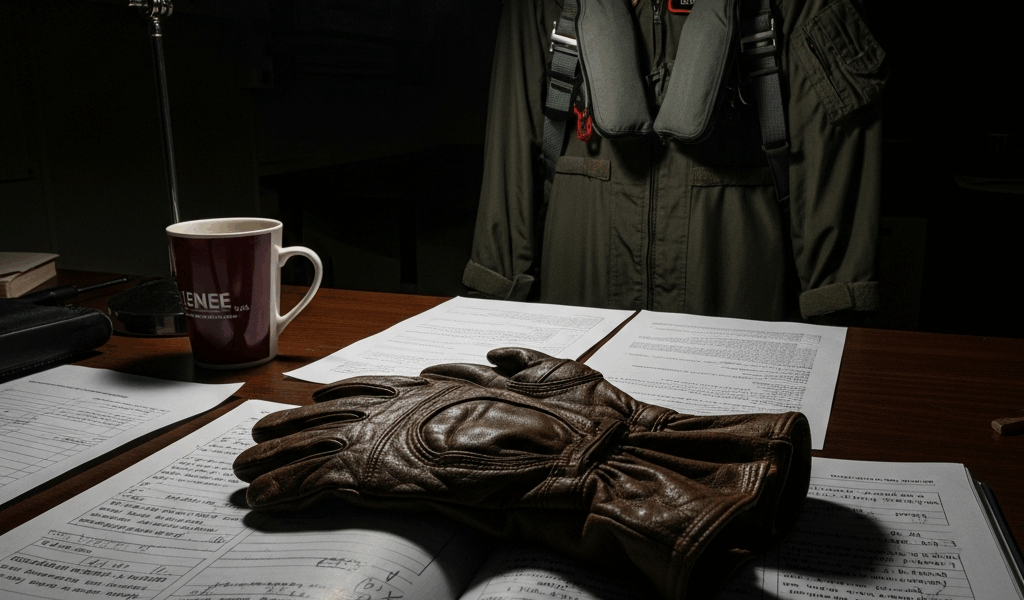
Why Fear of Failure Hits Military Pilot Trainees Harder
Military pilot fear of failure is unlike almost any other professional anxiety. I’ve spent the last six years working alongside UPT instructors and current students, and what strikes me immediately is how *rational* their fear actually is. Fear of failure has gotten complicated with all the noise flying around pilot training — the social media stories, the YouTube channels, the myths about washout rates. But here’s what actually matters.
The numbers alone explain part of it. Undergraduate Pilot Training washout rates hover between 10-15% depending on the year and pipeline — that’s not a tiny percentage you can dismiss. You’ve already invested three years in officer training, passed medical boards, beaten out thousands of applicants. The sunk cost is staggering. Not just financially, but psychologically. Everyone around you passed the same initial screens. You’re comparing yourself to the best of the best, constantly.
Then there’s the safety-critical component that civilian training doesn’t replicate at scale. A mistake in a Beechcraft T-6 Texan II doesn’t just threaten your career. It threatens your instructor. Your wingman. The culture reinforces this correctly — you *should* feel the weight of that responsibility. But the weight is real, and it compounds.
Captain James Hendricks, a T-37 instructor out of Columbus Air Force Base, told me something I’ve heard from multiple instructors: “The students who struggle most aren’t the ones lacking ability. They’re the ones whose fear paralyzes their decision-making in the airplane.” The fear isn’t the problem. The fear *cascading into panic* is. That distinction matters more than people realize.
Peer comparison amplifies everything. You’re in a class of 20-30 people. You can see who’s progressing faster. You notice when someone drops. The stigma around struggling — even though it’s changing — still exists in subtle ways. Until you accept that this fear is *structural* to the environment, the techniques don’t land. Probably should have opened with this section, honestly.
Mental Technique 1 — Pre-Flight Compartmentalization
Compartmentalization isn’t avoidance. It’s the opposite. You acknowledge what happened. Then you actively contain it before strapping into the aircraft.
Here’s how pilots actually do this.
Fifteen minutes before preflight, find a quiet space — a locker room, an empty classroom, your car. Write down three things: (1) What you’re worried about happening today, (2) what actually happened last flight, and (3) what you’re going to focus on instead. That specificity matters.
The script varies, but here’s what I’ve heard verbatim from multiple UPT students: “Last flight, I botched the landing approach. That’s data. Today I’m focusing on energy management in the descent. Not the landing. Not validating my worth. Energy management.” You’re not saying “be better.” You’re narrowing the aperture to one controllable element.
Then — and this part is critical — you physically move. Walk to the aircraft. Do the preflight. Don’t replay the bad flight. Don’t catastrophize about check rides you haven’t flown yet. One instructor shared a variation: “Some of my studs write down the fear, leave the paper in their locker, and pick it up after the flight if they need to process it. Most don’t even look at it.” The act of externalization matters more than what happens after.
The goal is clarity on two things: what you can control (your focus, your procedures, your energy), and what you cannot (whether you pass, whether you fit the fighter community, whether you wash out). You walk to the aircraft prepared only for the former.
Mental Technique 2 — Stress Inoculation During Training
Stress inoculation is why military training exists in its current form. It’s deliberate. Instructors are *intentionally* creating failure scenarios. Engine failure simulation, electrical failures, hydraulic emergencies, spin recovery — these aren’t ambushes. They’re vaccines.
You practice the catastrophic scenario in controlled conditions until your brain categorizes it differently: from “this ends my career” to “this is a procedure I’ve done 40 times.” The first time your instructor pulls the throttle to simulate an engine failure at 2,000 feet, your heart rate spikes. You’re genuinely convinced something is wrong. You’re thinking about washout, about calling your parents, about the rest of your life. By the 15th time, your body doesn’t spike anymore. You’re just executing the checklist.
Captain Hendricks explained it this way: “Fear thrives on novelty and uncertainty. We remove novelty through repetition. We remove uncertainty through clear procedures. By the time they see the real emergency scenario on a check ride, it’s just noise they’ve already processed.” That’s what makes stress inoculation endearing to flight instructors — it actually works.
This is why students who embrace the training — who actually want the sim sessions to get harder — progress faster. They’re actively inoculating themselves. Students who dread the additional repetitions stay trapped in the catastrophic thinking longer.
The physiology changes too. After enough repetitions, your prefrontal cortex stays engaged under stress instead of your amygdala hijacking the show. You’re not *suppressing* the fear response. You’re building a competing neural pathway that prioritizes procedure execution.
Physical Practices That Calm Your Nervous System
Your nervous system doesn’t care about your pep talks. It cares about inputs.
Box breathing works. Specifically: inhale for 4 counts, hold for 4, exhale for 4, hold for 4. Repeat five times. I watched a student do this in the ready room 15 minutes before a check ride. It’s not magic — it’s parasympathetic activation through controlled breath. The vagal response is physiological. Your heart rate measurably drops.
Sleep protocol matters more than any other single factor. UPT students who fly early missions need 7-8 hours the night before. Not 6. Not “close enough.” The research on prefrontal cortex function during sleep deprivation shows decision-making degradation as early as hour 23 of wakefulness. You’re already in a high-stakes environment. Don’t self-sabotage with 5 hours of sleep because you’re nervous.
Nutrition timing is specific. Heavy meals 3-4 hours before flight. Nothing within 90 minutes of cockpit strapping. Blood sugar dysregulation manifests as anxiety in the cockpit. You think you’re afraid. You’re actually hypoglycemic. Eat a balanced breakfast. Drink water until you’re slightly overhydrated — you’ll urinate during preflight. These micro-details actually change your neurochemistry.
Caffeine is a trap. I’ve seen students wire themselves on three cups of coffee to “stay sharp” and then wonder why their heart rate won’t stabilize in flight. Your tremor increases. Your baseline anxiety is already elevated. Skip it on high-stakes days.
Physical exercise 24-48 hours before a check ride helps. Not cardio hangover the morning-of. But a solid run three days prior, or strength work two days out, regulates your HPA axis and improves stress resilience. You’re literally priming your nervous system to handle load better.
When to Get Help and How to Talk About It
Fear of failure is normal. Constant catastrophic thinking that doesn’t improve with exposure is not.
There’s a spectrum. On one end: healthy anxiety that sharpens performance. In the middle: persistent worry that interferes with sleep, appetite, or focus, but responds to the techniques above. On the far end: clinical anxiety that warrants intervention. So, without further ado, let’s talk about which bucket you’re in.
The military has pilot assistance programs. I won’t name them specifically — confidentiality matters — but they exist. Stigma around using them is decreasing, especially as the culture around mental health shifts. Seeking support is not a career ender. Ignoring a mental health issue until it crashes your performance is.
Talk to your instructor if you notice you’re spiraling. Not as a confession — as data. “I’m noticing my anxiety isn’t resolving after flights like it used to. What would you recommend?” Good instructors recognize that some anxiety requires external support. They’ll connect you with resources rather than quietly marking you as unreliable.
Know the difference between “I’m nervous about this check ride” and “I’m having panic attacks daily.” The former is the job. The latter needs professional intervention. Anxiety disorders are treatable. They respond to therapy and, sometimes, medication. Neither disqualifies you from flying if managed properly. I’m apparently the type who needs to mention this twice, and it’s important enough that I will.
Captain Hendricks said something important: “The student who hides their struggle and let’s it worsen is the one we lose. The student who says ‘I need help managing this’ is usually the one who goes on to have a long career.” Professionalism includes knowing your limits and asking for resources. Don’t make my mistake — I’ve seen careers derailed by pilots who waited too long to speak up.
Fear of failure in military pilot training is structural. The environment is designed to pressure-test you. But the pressure doesn’t have to become paralysis. Compartmentalization, stress inoculation, physical discipline, and knowing when to escalate to professional support — these aren’t workarounds. They’re the actual toolset that separates pilots who wash out from ones who earn their wings. That’s what makes this manageable.

Leave a Reply