What the Aviation Bonus Program Actually Is
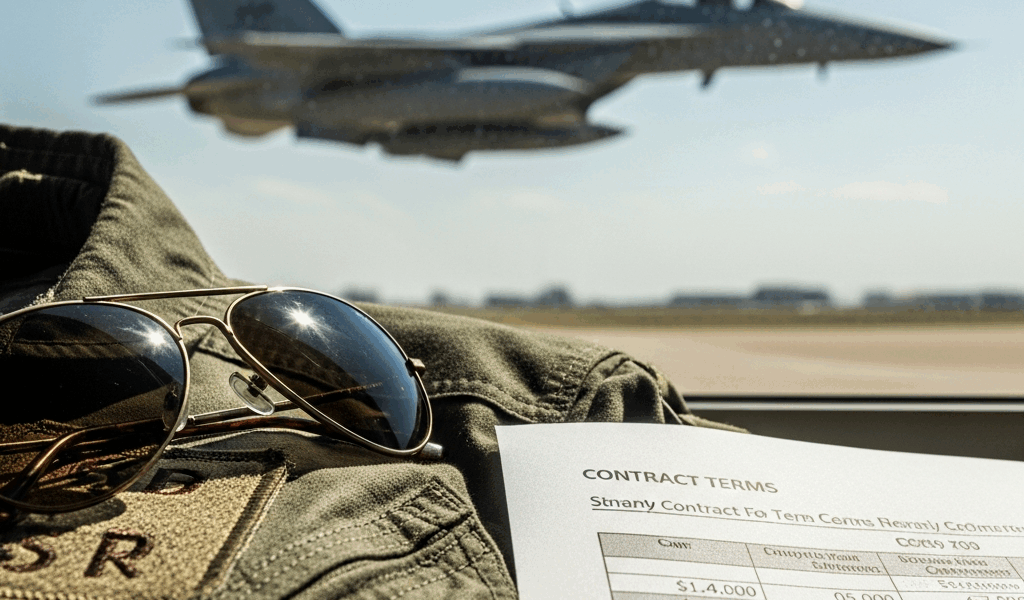
Military pilot retention has gotten complicated with all the airline hiring noise flying around. So let me cut straight to it: the Aviation Bonus (AvB) program is a retention tool. Full stop. Not a gift, not a reward for good behavior — a calculated incentive to keep trained pilots from walking out the door toward Delta or FedEx.
But what is AvB, exactly? In essence, it’s a congressionally authorized payment tied to a new Active Duty Service Commitment. But it’s much more than that. Congress reauthorizes it every single year, which means the dollar figures shift constantly based on budget pressure and pilot shortage projections nobody outside the Pentagon fully sees coming.
Here’s the part pilots sometimes miss: AvB sits completely separate from base pay and flight pay. You keep both of those regardless. The bonus exists purely to sweeten the moment when your initial commitment expires — usually somewhere between six and eight years of service — and the airlines are suddenly calling your name. The Air Force needs you to stay. So they offer you money. The catch is a signature on a new ADSC. No signature, no bonus. Simple as that.
Current AvB Rates and Contract Length Options
So, without further ado, let’s dive into the actual numbers — because that’s what you came here for.
Recent fiscal years have put annual AvB payouts somewhere between $25,000 and $35,000 for most pilots. That range isn’t arbitrary. Your year group, your airframe, and how badly the Air Force wants to keep pilots in your specific community all factor in. The math on total contract value is straightforward: annual rate multiplied by contract length. A three-year deal at $32,000 annually is $96,000 gross before taxes hit it.
Contract lengths typically break down like this:
- 1-year contracts: Often $25,000–$28,000 annual payout. Lowest commitment, lowest cash.
- 2-year contracts: Roughly $28,000–$31,000 per year, paid annually or in two lump sums depending on that fiscal cycle’s policy.
- 3-year contracts: Usually $30,000–$35,000 annually. Most pilots I’ve talked to consider this the sweet spot.
- 4-year or longer contracts: Can push past $35,000 per year, though availability varies hard by airframe and what Congress actually funded that October.
Payment structure varies too. Some years the Air Force drops a lump sum at contract signature, then annual payments on your anniversary date. Other years it splits into two equal payments per year. Your finance office will know which structure applies to your cycle — ask specifically, don’t assume.
Fighter and high-demand airframe communities see multipliers applied to base rates. An F-16 or F-35 pilot isn’t getting the same offer as a trainer pipeline instructor. A heavy pilot on a three-year contract might see $33,000 annually while someone instructing in the T-6 pulls $26,000 on the identical contract length. Same rank, same time-on-station. Different market value. The Air Force doesn’t exactly broadcast this in a press release, but it’s real and it matters.
Who Is Eligible and When the Window Opens
Probably should have opened with this section, honestly. Because none of the rate information above matters if you don’t actually qualify — or if you miss the window entirely.
Eligibility gates are strict. The Air Force isn’t handing retention bonuses to pilots who can’t extend meaningful service. Most fighter and transport pilots hit their eligibility window right around that six-to-eight-year mark when the initial ADSC runs out. That’s your window. The Air Force contacts you — or should, though notification sometimes lags by weeks — presenting current AvB rates for various contract lengths. You typically get 60 to 90 days to decide.
Miss the window? You’re done until the next cycle. No retroactive bonuses. No appeals process for “I was thinking about it last month.” That’s it.
Guard and Reserve pilots live in an entirely different structure. Their AvB eligibility timelines, payment schedules, and rate tiers don’t mirror Active Duty at all. If you’re Guard or Reserve, go straight to your unit retention officer — don’t extrapolate from anything you read about AD rates, including this.
That’s what makes the AvB timing endearing to us military aviators in a dark sort of way. The offer lands precisely when you’ve got enough hours to be genuinely valuable to the Air Force and enough experience to understand exactly what airline seniority lists look like, what a regional captain earns versus a major carrier first officer, and how fast those lists actually move. It’s intentional. The Air Force knows when you start doing the math.
How Airframe and Specialty Affect Your Bonus Amount
Not every fighter pilot gets the same offer. Not every heavy driver does either. The Air Force forecasts pilot inventories roughly two years out, and those projections drive bonus tiers harder than anything else.
If the F-35 community is burning through experienced pilots faster than expected — retirements, medical separations, training pipeline delays stacking up — the retention bonus for that community goes up. If the T-6 trainer pipeline is sitting at full staffing, instructor rates drop or disappear entirely. Supply and demand, military edition.
Your MWS — your mission-qualified weapon system — matters most in this calculation. The Air Force officially designates communities as either “critically manned” or “above authorized.” Critically manned means understaffed, which means top-tier bonus offers. Above authorized means you might not receive an offer at all, even if you’re actively trying to extend. I knew a C-17 pilot who received a three-year AvB offer at $34,000 annually back in 2019 — the cargo community was hemorrhaging experienced captains to FedEx and UPS that year and the Air Force knew it. Same year, a T-37 instructor in the same rank and year group got offered nothing. Training pipeline staffing was full. Don’t make my mistake of assuming community dynamics don’t matter until you’re sitting in front of the retention officer.
Critical specialties carry their own tiers too. Combat systems officer on a B-1 versus a pilot on the same airframe? Different offers. Electronic warfare officer, search and rescue pilot, combat controller — each carries its own bonus multiplier. The published “critically manned” list is your first read every cycle.
Is It Worth Signing the Bonus Contract
That’s your call, not mine. But here’s the honest framework.
Signing locks you in for the full contract duration. Separate early and you repay — typically the bonus prorated against your remaining obligation. Walk away eighteen months into a three-year $96,000 deal and you’re cutting a check back to the government for roughly $48,000. That stings in a very specific, very real way.
The airline hiring timeline piece is where it gets complicated. Major carriers weight their preference lists toward military separations with recent active-duty end dates. Sign a three-year extension and you’re pushing your available-to-hire date three years forward. Meanwhile your peers who declined are interviewing with Southwest or United inside twelve months, landing seniority numbers while you’re finishing year one of your commitment. Three years of seniority list movement is not a small thing — ask any regional captain who waited too long.
I’m apparently wired to value stability over upside, and the guaranteed military income works for me while speculative airline timelines never quite settled my nerves. But that’s me. The other side of the ledger is real too: $96,000 in hand beats $0 in hand. Your base pay and flight pay stay exactly the same either way — the bonus is purely additive. Invested properly over a three-year contract, it’s genuinely meaningful money. Airline pipelines also close unexpectedly. A hiring freeze in year two of your planned airline transition is a different kind of painful.
Run your own numbers before you decide anything. What’s a regional first officer actually earning in year three? What does major carrier captain pay look like at fifteen years seniority? What’s the realistic timeline from your separation date to that seat? Then ask yourself what the certainty premium is worth to you right now, today, with your specific financial situation.
One last thing — and this matters more than anything else in this article. Current AvB rates change every single fiscal year. October brings new authorization numbers. The figures cited here reflect recent cycles, but your decision shouldn’t rest on last year’s rates. Get the current AvB memo from your base finance office or retention officer directly. They’ll have the actual 2024 or 2025 figures. Don’t make a multi-year career commitment based on secondhand numbers from the internet.
For a branch-neutral baseline before evaluating an Air Force bonus offer, see the Navy vs Air Force pilot compensation comparison.



Leave a Reply