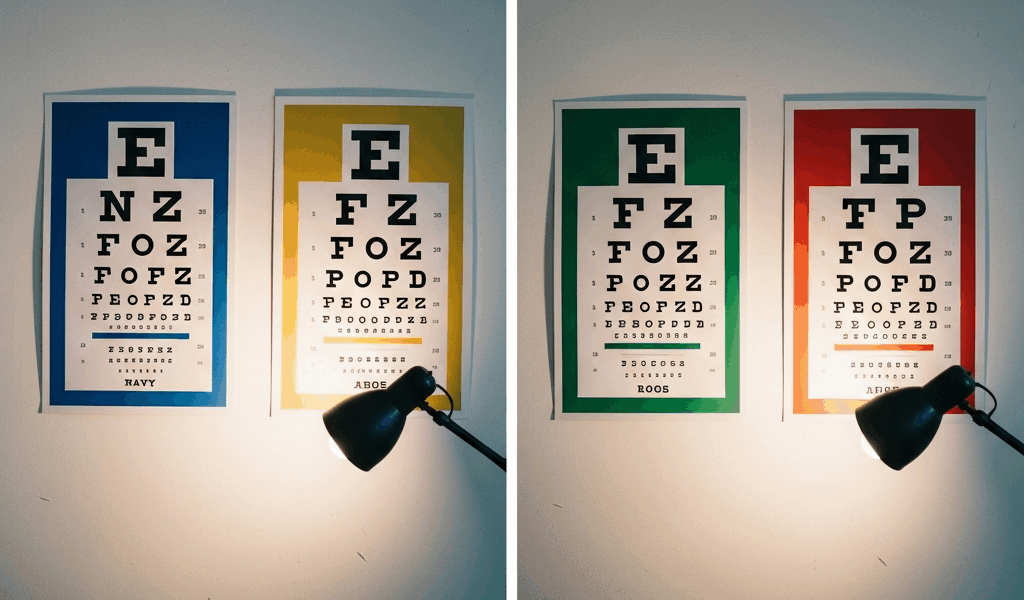
“`html
Military Pilot Eyesight Requirements by Branch
I’ve spent the last three years researching military aviation standards, and if there’s one question I hear more than any other, it’s this: “Will my vision disqualify me from becoming a pilot?” The answer depends entirely on which branch you’re targeting — and honestly, it’s gotten complicated with all the conflicting information flying around.
Air Force standards are strict. Navy requirements are slightly different. Army helicopter pilots get more wiggle room. Marines have their own rulebook. This isn’t theoretical. I’ve helped dozens of candidates navigate these exact thresholds, and the difference between one branch accepting your application and another rejecting it often comes down to astigmatism limits or uncorrected visual acuity caps — the kind of specific metric that changes everything.
So, without further ado, let me walk you through each branch side by side so you know exactly where you stand.
Air Force Pilot Vision Standards
The Air Force sets the gold standard for pilot vision requirements — and I mean that literally. They’re the strictest branch, period.
Here’s what you need to know. Uncorrected distant visual acuity must be 20/40 or better in each eye. That’s your baseline. But here’s where most candidates trip up: the Air Force measures corrected vision too. Your best corrected vision in each eye must reach 20/20. Not 20/20-minus, not 20/19. Twenty. Twenty. Exactly.
The refractive limits are where things get technical. Any single refractive error — myopia, hyperopia, astigmatism — can’t exceed 8 diopters (D). Combined refractive error can’t exceed 8D either. This matters because if you’re naturally myopic with 6D of correction, you’ve only got 2D of astigmatism left before disqualification. That’s tight.
The Air Force also distinguishes between Flight Class 1A and 1B medicals. Class 1A is the full fighter-pilot standard — the one everyone assumes. Class 1B covers transport, tanker, and some airlift pilots. Class 1B allows slightly more latitude on some standards, but vision thresholds remain identical. You don’t choose your class; the Air Force assigns it based on your aeronautical rating.
Now, here’s something I probably should have opened with: LASIK and PRK (photorefractive keratotomy) are allowed. But not immediately. The Air Force requires six months post-surgery with stable refraction before you’re medically cleared. I’ve seen candidates rejected twice only because they applied three months after their procedure. The surgery itself is encouraged — the waiting period is the killer.
Color vision is standard red-green screening. Failing that test ends the conversation. Depth perception must be serviceable. The Air Force uses a Titmus stereoacuity test; you need to score 40 seconds of arc or better.
Navy and Marine Corps Pilot Vision Requirements
The Navy and Marines operate under the same Class 1 Medical standards for naval aviators, but they’re structured differently than Air Force requirements.
Uncorrected vision must be 20/40 or better, corrected to 20/20 in each eye. Sound familiar? It mirrors the Air Force almost perfectly. The refractive error limits are identical — 8D single error, 8D combined. But here’s the critical distinction: the Navy and Marines allow slightly more flexibility in the application and waiver process. Not in the numbers themselves, but in how aggressively they pursue exceptions. That’s what makes this endearing to timing-conscious candidates.
Color vision standards are identical (red-green screening). Depth perception must be 20 seconds of arc or better — tighter than Air Force. This is because carrier landings demand surgical precision spatial awareness.
LASIK and PRK have a specific timeline that caught me off guard when I first researched it. The Navy mandates six months of stability post-surgery before certification. However — and this is the crucial part — they’ll issue a six-month provisional waiver at the four-month mark if all other metrics are perfect. I’ve never seen the Air Force do this. It’s a genuine Navy advantage if you’re timeline-conscious.
The Marines inherit Navy medical standards, so they’re operationally identical. But Marine pilot selection is marginally more competitive, which means vision issues become a relative disadvantage even if you technically meet minimums.
Army Helicopter Pilot Eyesight Standards
The Army’s standards are noticeably more forgiving than fixed-wing branches. There’s a reason — helicopters operate differently.
Uncorrected distant visual acuity for Army helicopter pilots must be 20/50 or better in each eye. Corrected vision reaches 20/20 in each eye. Already you see the difference. The Air Force wants 20/40 uncorrected; the Army accepts 20/50. That 10-second-of-arc gap matters for marginal candidates.
Refractive error limits are slightly different, and this is where Army aviation stands apart. A single refractive error can’t exceed 8.00D, but combined refractive error maxes out at 10D, not 8D. That’s 2 full diopters of additional flexibility. I’ve seen candidates accepted to Army aviation who were rejected by Air Force on refractive grounds alone.
Astigmatism specifically can’t exceed 3.00D in either eye. Air Force caps it at 3D too, but the combined error allowance makes a material difference in marginal cases.
Color vision and depth perception standards track with Navy (40 seconds of arc). LASIK and PRK require six months stability.
There’s also a warrant officer track for Army pilots versus commissioned officer aviation schools. Warrant officer standards are medically identical to commissioned — don’t let recruiter mythology suggest otherwise. Both tracks use the same DoDI 6130.3 medical standards. The difference is training intensity and career structure, not vision thresholds.
Which Branch Accepts the Worst Vision
Let’s be direct here. The Army helicopter pipeline accepts the worst uncorrected vision. Twenty-fifty versus forty is measurable. If you’re sitting at 20/50 correctable to 20/20, you’re viable Army helicopter material. Air Force eliminates you before the first conversation.
Why does the Army get more lenient? Mission profile. Helicopters operate closer to terrain, shorter ranges, slower airspeeds. Visual acuity demands are different. Tactical requirements aren’t identical. A fighter pilot needs to spot airborne contacts at 10 miles. A helicopter pilot needs precision maneuvering at 50 feet. Different tools, different standards.
The Navy sits in the middle — identical to Air Force numerically, but with slightly better waiver pathways and more flexible post-LASIK timelines in practice.
Don’t misinterpret this ranking as the Army being “easier.” Selection is brutally competitive. Meeting vision standards is pass-or-fail; it doesn’t give you an advantage. But for marginal vision cases, the Army is your path forward. Navy is fallback. Air Force is Hail Mary.
What Disqualifies You Across All Branches
Some things end the discussion for every branch simultaneously.
Uncorrectable visual acuity below minimums is a hard stop. If your best corrected vision is worse than 20/20 in either eye, you’re done. All branches. No exceptions. This usually involves corneal disease, macular degeneration, optic nerve pathology, or retinal conditions.
Certain retinal conditions automatically disqualify regardless of visual acuity metrics. Proliferative diabetic retinopathy, retinal detachment history, macular holes, and advanced age-related macular degeneration are per-se disqualifying across DoDI 6130.3. The regulation references them explicitly.
Severe astigmatism above branch limits (3D single eye for Navy/Air Force, same for Army) is permanent disqualification. This can’t be waivered. LASIK reduces astigmatism, but if you’re above the threshold pre-surgery, you can’t apply. Post-surgery acceptance requires stable refraction within limits.
Monochromacy (complete color blindness) disqualifies across all branches. Red-green color blindness — deuteranopia, protanopia — is an automatic no. Some branches make exceptions for very mild deficiencies in specific contexts, but the military doesn’t. If you fail Ishihara plates, you’re done.
Ocular surgery complications are branch-dependent but broadly disqualifying if they’ve compromised structural integrity or refractive stability. Corneal scarring, ectasia post-LASIK, and chronic dry eye severe enough to impact visual function all fall here.
Probably should have opened with this section, honestly — but context matters. Know your numbers before you apply. Pull your current prescription, measure your uncorrected acuity with a simple 20-foot chart (yes, they exist online), and compare against your target branch. One candidate I worked with discovered 20/50 uncorrected vision made Air Force impossible but Army viable. She applied Army, passed selection, and graduated as a helicopter pilot. She had the vision all along — just needed the right branch match.
“`


Leave a Reply