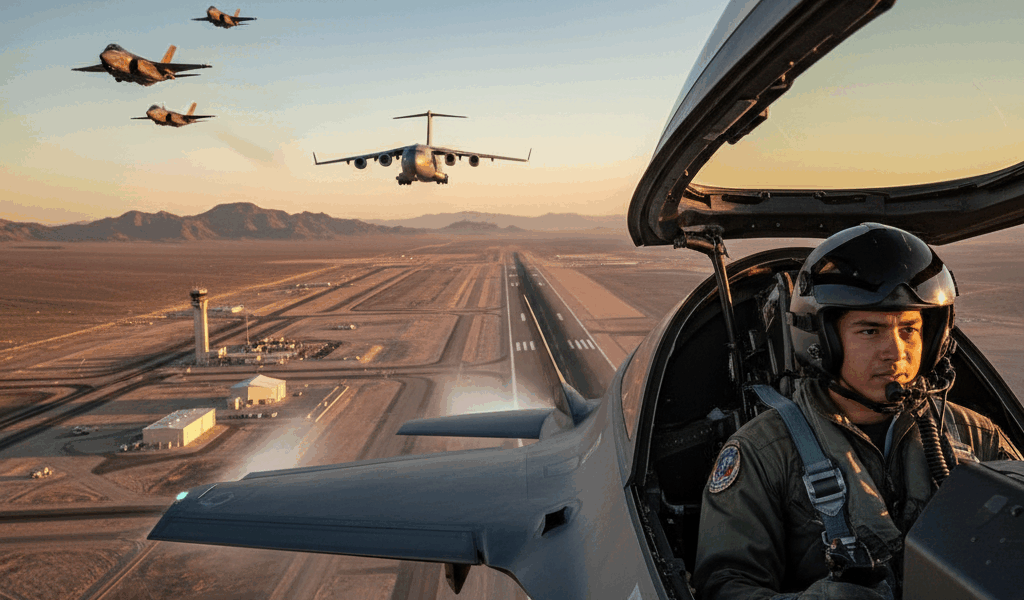
Fighter pilot training has gotten complicated with all the selection criteria and training phases flying around military aviation pipelines today.
The journey to becoming a military fighter pilot is among the most demanding career paths in aviation, period. From initial selection through advanced tactical training, the pipeline tests candidates physically, mentally, and academically at every stage with no breaks and no shortcuts.
Initial Pilot Training Selection
Probably should have led with this section, honestly. Before entering the cockpit, candidates must clear multiple hurdles that eliminate most applicants. Air Force candidates typically attend Officer Training School or graduate from the Air Force Academy after four demanding years. Navy and Marine Corps pilots go through Officer Candidate School or the Naval Academy with similar rigor. Strong academic credentials, particularly in STEM fields, significantly improve selection chances though nothing guarantees a slot.
That’s what makes medical requirements so important to understand early—they’re stringent and non-negotiable. Perfect vision was once mandatory, but PRK and LASIK are now acceptable for some programs if done correctly. Height restrictions exist due to ejection seat parameters, typically between 64 and 77 inches standing height. Extensive physical and psychological evaluations ensure candidates can withstand the stresses of high-performance flight that would break most people.
Undergraduate Pilot Training
Air Force UPT spans approximately one year and begins with academics covering aerodynamics, weather, navigation, and aircraft systems that form the foundation of everything. Students then progress to the T-6 Texan II for primary training, learning fundamental flying skills and aerobatic maneuvers that test whether they belong in military cockpits.
After primary, students compete for advanced training tracks based on performance and class ranking. Fighter and bomber candidates move to the T-38 Talon, a supersonic trainer that introduces high-G maneuvering and formation flying that separates serious fighter candidates from everyone else. This phase determines who’s headed for fighters versus transport and tanker assignments.
Fighter Fundamentals and B-Course
Graduates assigned to fighters attend Introduction to Fighter Fundamentals, building tactical skills before transitioning to their specific airframe where the real learning begins. The subsequent B-Course covers aircraft-specific systems, weapons employment, and combat tactics unique to each platform. Training includes air-to-air combat, ground attack, and mission planning that takes months to master.
Operational Squadron Assignment
New fighter pilots arrive at operational squadrons as wingmen, the lowest position in the tactical formation where humility is mandatory. They spend their first years perfecting basic fighter maneuvers and building experience under supervision of senior pilots who’ve done it all before eventually upgrading to flight lead and instructor positions as they prove themselves.
The entire process from commissioning to combat-ready status typically takes three to four years, representing millions of dollars in training investment per pilot that the military wants to recoup through years of service.

Leave a Reply