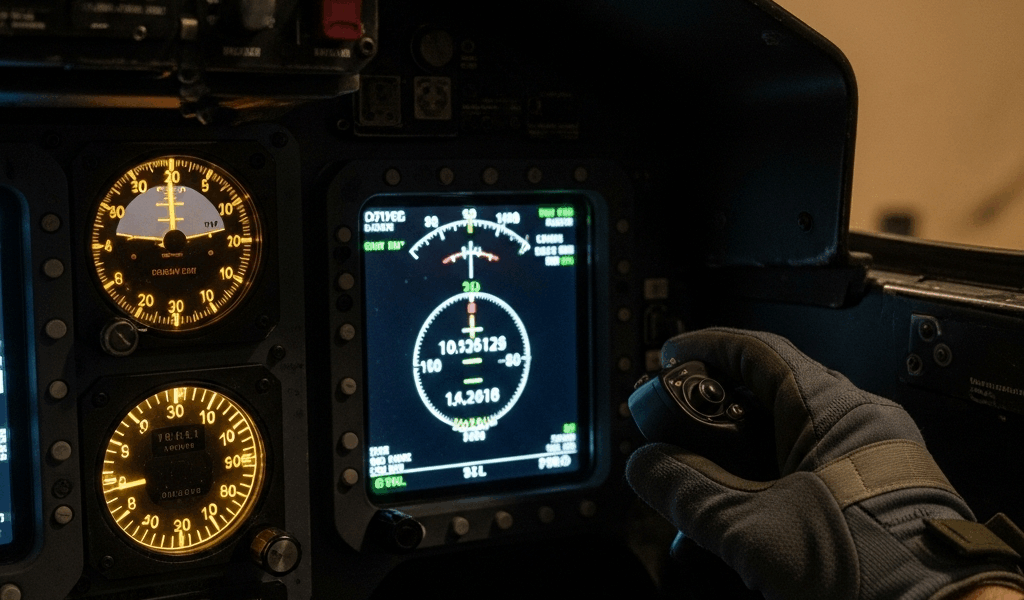
Why G-Suit Pressure Matters in High-G Flight
Too low? Your blood pools in your legs and you’re seeing grey, then black, in seconds. Too high? You’re fighting numb feet and compromised circulation that makes your hands tingle at the worst possible moment during a merge.
Here’s the thing about G-suit pressure settings — they’re not abstract numbers.
They’re the literal difference between maintaining consciousness during a defensive break turn and ending the fight on your back. The anti-G suit inflates via air bladders running down your legs and across your torso. As G-loads increase, these bladders inflate to apply graduated pressure. We’re talking roughly 80–120 pounds per square inch depending on your aircraft and personal tolerance. The whole point? Preventing blood from pooling in your lower extremities.
I watched a F-16 pilot in my squadron push pressure settings 15% too high because he read someone else’s settings off a maintenance board. His calves were cut off by mid-flight. His feet went numb. He aborted a tasking and had to be checked by flight medicine. Probably should have opened with this section, honestly.
When pressure runs too low, your body’s G-tolerance drops by 2–3 Gs. That sounds small. It’s catastrophic. You’re hitting 6 Gs and experiencing symptoms you should only hit at 8 or 9. Your peripheral vision greys first — your vision field shrinks to a tunnel. Next comes greyout, then loss of consciousness, or what we call G-LOC. The G-suit isn’t doing its job, and you’re in trouble.
Excessive pressure creates different hazards entirely. Your legs and core get compressed so hard that you lose fine motor control in your feet. Your breathing becomes shallow because torso pressure restricts your diaphragm. Over multiple sorties, high-pressure settings accelerate suit wear. The bladders crack. The stitching fails. You’re looking at $8,000–$12,000 suit replacement when caught early, or worst case, a suit malfunction at 7 Gs. That’s a bad day.
Individual tolerance varies wildly — and I mean wildly. I run 105 psi in my F-16 Block 50. My wingman runs 115 psi in the same aircraft. His bone density is higher. His cardiovascular response is faster. What works for him leaves me pale and gasping. This is why pre-flight pressure calibration isn’t optional. It’s foundational.
Pre-Flight G-Suit Pressure Checks
Walk into any fighter squadron, and you’ll find the pre-flight G-suit check listed as one line on the 127-item checklist. Most pilots skip it or rush it. Those are the ones ending up in the scenarios I’m about to describe.
Start with visual inspection. Remove your suit and lay it flat on the desk in maintenance. Look for discoloration, tears, or separation at the seams. Check zipper operation — slide it up and down three times. Stiff or catching? The suit’s moisture-logged or the teeth are bent. Either way, pressure distribution becomes uneven. Inspect the inlet hose where it connects to the suit body. Hairline cracks here are invisible but devastating.
Next comes the pressure gauge itself. Your suit connects via an 8-foot inlet hose to either a standalone pressure gauge or a gauge integrated into your ejection seat control panel. It depends on your platform. For F-16 pilots, pressure gauges read 0–150 psi with 5 psi increments. F-18 gauges vary slightly — some read 0–120 psi. Know your aircraft’s gauge calibration before flight. Don’t assume.
Connect the suit to the pressurization source. That’s typically shop air at 8–10 psi regulated down through a suit pressurization console. These consoles look like small metal boxes with dials and pressure regulators. Most fighter squadrons have 2–3 of them for the entire flight line. You’re looking at aging equipment that gets 20+ uses daily.
Apply 20 psi initial pressure and watch the gauge for 30 seconds. The needle should hold steady. If it drops more than 3 psi, you’ve got a slow leak. The suit’s not ready. Don’t fly it. Slow leaks are insidious because they fail mid-flight, sometimes at altitude over hostile territory.
Now increase pressure to your personal setting. Mine’s 105 psi. I run that all the way up and hold for 90 seconds. The bladders should feel equally firm across your legs and torso. Squeeze the leg sections — they should compress uniformly. Press your torso bladders — same response. Uneven inflation means internal bladder damage or a kink in the inlet tubing.
Check the fit by putting the suit on and sitting in a seat, if possible. Pressure should feel graduated — tighter on your lower calves, progressively releasing toward your torso. If your whole suit inflates like a balloon, the inlet manifold has a design problem or the regulator’s sending uncontrolled pressure downstream.
Manufacturer specs matter. Gentex, the primary G-suit manufacturer for U.S. fighter platforms, publishes tolerance ranges for each suit variant. F-16 pilots typically run 95–125 psi. F-18 pilots tend toward 100–130 psi. A-10 pilots, flying lower-G profiles, often run 70–90 psi. Using a competitor’s suit specs will leave you under-protected or over-pressurized.
Common G-Suit Pressure Problems and Fixes
Slow pressure buildup during pre-flight check is the first red flag I track. You apply shop air and the gauge creeps up at 2–3 psi per second instead of reaching full pressure in 10–15 seconds. This happens when the regulator on the pressurization console is drifting or the inlet hose has developed a pinhole leak. Diagnosis is straightforward: Disconnect the suit. Pressurize the hose alone. If it holds, the suit’s leaking. If the hose leaks, replace it before flight.
Uneven leg and torso pressure shows up immediately when you inspect the inflated suit. Your left leg bladder feels like a rock. Your right leg feels soft. This is almost always internal bladder failure or a kinked divider wall inside the suit. You can’t fix this field-level. The suit needs depot maintenance, period.
Rapid pressure loss during flight is the nightmare scenario. You’re at 6 Gs, your G-suit was holding 105 psi on the ground, and now the gauge reads 85 psi and dropping. Your body’s already committed to high-G maneuvering. Your suit’s failing in real time. Response: Reduce G-load immediately. Level the wings. Climb if terrain allows. Get to a control position. Most pilots don’t have the luxury of gradual descent in a tactical scenario, so emergency depressurization procedures kick in — you manually vent the suit via a release valve near your hip, depressurize completely, and manage your physiology through breathing techniques and leg tensioning until landing.
Gauge malfunction is harder to catch because you won’t know it’s broken until pressure validation. During pre-flight, apply 50 psi and verify the needle responds. Apply 100 psi. The needle should climb proportionally. If it sticks at one reading or moves erratically, the gauge’s internal diaphragm is compromised. Replace it. Never fly with an unreliable pressure indicator.
A fifth scenario that catches pilots: pressure creep. Your suit’s been pressurizing normally all week. By Friday, you notice the gauge hits full pressure 5 seconds faster than normal. The hose might be developing micro-cracks that actually improve flow rate momentarily before catastrophic failure. If pressurization speed changes, inspect the suit and hose immediately under magnification.
Adjusting Pressure Mid-Flight vs Pre-Flight
In-flight adjustments are nearly impossible. Your suit’s connected to a fixed pressurization source fed by ram air or an onboard compressor. Zero manual control over pressure buildup once airborne. The system’s passive — pressure increases automatically as G-load increases because the regulator senses back-pressure and allows more air into the suit.
Some older block F-16s have a manual G-suit valve on the left console where pilots can dump pressure mid-flight. I’ve used it exactly twice in my career. Both times, I was over-pressurized and couldn’t wait for landing without risking circulation loss. The valve’s binary — fully open or fully closed — so you either vent completely or hold pressure. There’s no gradual adjustment.
Pre-flight calibration is where you have leverage. Spend 10 minutes adjusting your suit pressure on the console before stepping to the jet. Increase or decrease by 2–3 psi increments. Your body will tell you what works. You’re looking for sustained comfort across a 30-second inflation period, then confirmation that pressure holds without creeping.
Individual tolerance also shifts day-to-day. I noticed my suit felt loose one morning and pressurized 5 psi higher. Medical exam that afternoon revealed I was dehydrated — my blood volume was lower, my G-tolerance was compromised, and my suit was compensating. The moment I rehydrated, I dropped back to 105 psi. Listen to your body.
Emergency depressurization isn’t optional learning. If your suit fails catastrophically mid-flight, you’ve got maybe 90 seconds to recognize it, initiate emergency dump procedures, and transition to manual G-strain techniques. That means tensioning your legs, grunting against 6+ Gs of pressure, and controlling your breathing to maintain blood pressure in your head. It’s brutally hard. Pilots who know their personal physiology and practice it regularly survive intact. Pilots who panic lose consciousness or crash.
When to Ground the Suit and Call Maintenance
This is where pilot judgment overrides checklists every single time.
Ground the suit immediately if pressure drops below 80% of your programmed setting during pre-flight validation and won’t stabilize. If you’re set for 105 psi and it maxes out at 82 psi, the suit’s compromised. Call maintenance. Don’t negotiate.
Visible tears or punctures in the bladder material are non-negotiable. I had a suit with a 2-millimeter hole in the leg bladder that was only visible if you pressurized it and looked at the seam under direct light. We caught it because pressure was dropping 8 psi per minute during check. The suit sat in maintenance for 12 days.
Unresponsive controls or dulled sensation in your feet during pre-flight suggests torso pressure is too high or the leg bladders are over-pressurizing unevenly. Land the jet, depressurize, and get flight medicine to evaluate circulation. Pressure-induced neuropathy is temporary but serious.
Maintenance contact protocols depend on your branch. Air Force pilots contact their squadron life support officer immediately. Navy pilots route through ship’s aviation maintenance. Each branch has different timelines for suit replacement — Air Force typically turns them in 4–8 weeks, Navy can stretch to 12 weeks depending on depot availability. Plan accordingly.
One last thing I’ll add because I learned it through experience: trust your equipment, but trust your body more. Your G-suit is keeping you conscious. Pressure settings aren’t guesses — they’re calibrated to your physiology. Check them methodically, adjust them empirically, and ground the suit the moment something feels wrong. The hardest part of being a fighter pilot isn’t flying at Mach 2. It’s admitting that your gear isn’t ready and sitting down instead.


Leave a Reply