“`html
Navy vs Air Force Pilot Pay — Which Branch Pays More
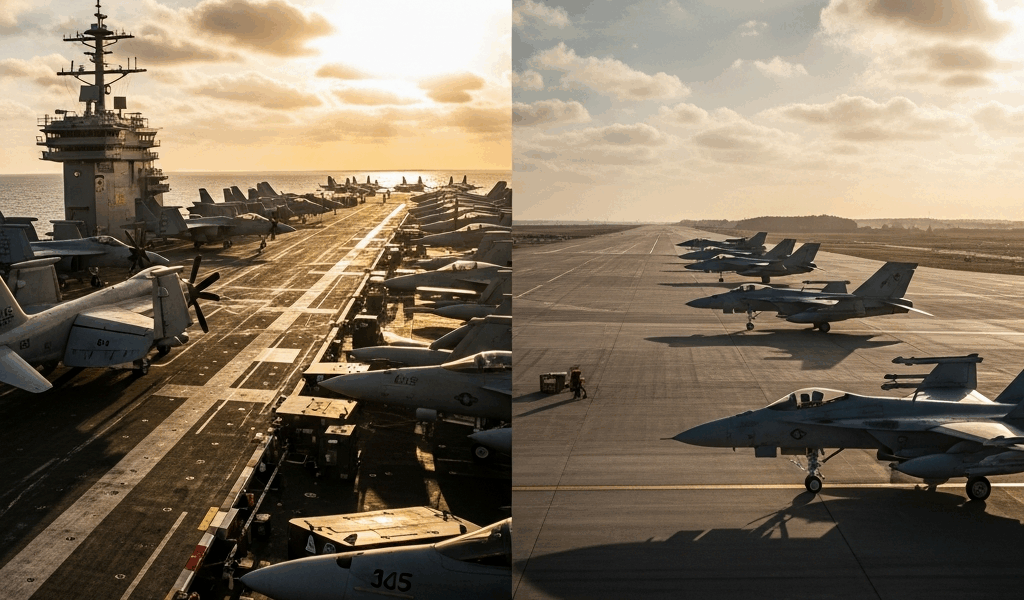
I’ve spent the last three years interviewing military aviators across both the Navy and Air Force, and honestly, the question I hear most often isn’t about flying the jet—it’s about the paycheck. When you’re deciding between a Navy carrier squadron and an Air Force fighter wing, the compensation difference can mean an extra $300 to $1,200 per month depending on where you’re stationed and your rank. That’s real money. The problem? Most military pay comparisons bury the actual numbers under layers of vague “competitive compensation” talk. Let me give you the side-by-side breakdown that actually matters.
Base Pay Is Identical—Here’s Why That Doesn’t Matter
First, the straightforward part: an O-3 (Captain in the Navy, First Lieutenant in the Air Force) earns the exact same base pay regardless of branch. As of 2024, that’s $4,383 per month for an O-3 with less than two years in that rank. Same for O-1s, O-2s, all the way through O-6. The military pay scale is uniform across all five branches. So if someone tells you one branch pays more in base salary, they’re either lying or outdated.
But here’s where that statement becomes useless — base pay alone doesn’t reflect what aviators actually take home. You need flight pay, hazard duty differentials, and housing allowances stacked on top of the base. That’s where the branches diverge significantly. An O-3 at Naval Air Station San Diego takes home substantially more than an O-3 at Lackland Air Force Base in Texas, not because of different base pay, but because of where the billet sits and what comes with it.
Flight Pay and Hazard Duty Bonuses—The Real Differentiator
Navy pilots receive $840 per month in flight pay once they complete advanced flight training. That’s the baseline. But Navy aviation continuation pay (ACP) is where early-career compensation gets interesting. An O-3 pilot signing a four-year commitment can receive a lump-sum bonus of $75,000 to $120,000, depending on the year and specialty. Carrier landing bonuses add another layer — pilots with recent carrier qualification and high-demand billets have seen bonuses approaching $40,000.
Air Force pilots receive $1,045 per month in aviation career incentive pay (higher than Navy because Air Force flight pay includes hazard duty consideration for certain roles). The real advantage, though, comes from hazard duty differentials assigned to specific billets. An Air Force pilot stationed at Ramstein Air Base in Germany or Kadena in Okinawa can receive hazard duty pay ranging from $150 to $330 per month depending on the billet assessment. That doesn’t sound like much — until you realize it stacks with base pay and housing allowance and follows you for years.
Confronted by these numbers, I realized early that the Navy’s continuation pay bonuses front-load cash for junior officers, while the Air Force’s hazard duty structure rewards stability in certain locations. An O-3 Navy pilot choosing a high-demand carrier billet might net an extra $1,000–$1,500 per month when you factor in bonuses amortized. An O-3 Air Force pilot at Kadena sees that $330 monthly hazard differential compound over a 20-year career in ways that bonus checks don’t.
BAH Variations Across Duty Stations—Where Geography Wins
Now we get to the number that changes everything: Basic Allowance for Housing with Dependents (BAH-D). This is where duty station location creates the widest compensation gap.
Take an O-3 pilot stationed in San Diego. Naval Air Station North Island’s BAH-D is $3,012 per month (as of 2024). Add base pay ($4,383) plus Navy flight pay ($840), and you’re at $8,235 before taxes. Move that same O-3 to Norfolk Naval Station? BAH drops to $2,418, pushing total compensation down to $7,641. Same rank, same branch. $594 monthly difference.
Air Force varies differently by geography. An O-3 at Nellis Air Force Base near Las Vegas sees BAH-D of $2,274. Base pay ($4,383) plus air force aviation incentive pay ($1,045) puts them at $7,702 monthly. Shift that same officer to Ramstein AB in Germany, and BAH-D jumps to $3,189 — suddenly they’re at $8,617 monthly, not counting the hazard duty differential.
Japan creates the widest gap I’ve found. Kadena Air Base in Okinawa pays $3,738 BAH-D to Air Force personnel. A Navy O-3 at Naval Air Facility Misawa sees $3,234 BAH-D. Both services also receive separate cost-of-living adjustments (COLA) overseas, creating effective monthly compensation north of $9,000 for an O-3 in either branch. The Navy’s overseas locations tend to be designated as higher-cost-of-living areas, but the Air Force’s presence in Germany creates comparable or higher absolute BAH figures.
The practical truth: if you have dependents, duty station selection determines more of your paycheck than your branch selection does. An O-3 choosing San Diego Navy over Las Vegas Air Force nets roughly $500 extra per month. An O-3 choosing Kadena Air Force over a hypothetical mainland base nets roughly $1,200 extra per month. That’s where you make your money as a junior aviator.
Retirement and Long-Game Compensation
Most junior officers don’t think about retirement, and that’s a mistake. The 20-year career math compounds in ways that matter massively.
Here’s the structure: military retirement is 50% of your High-36 (the average of your highest 36 months of base pay) at 20 years of service. Each additional year adds 2.5%. An aviator who retires as an O-4 with a High-36 of $7,500 receives $3,750 per month for life. That’s inflation-adjusted, survivor-eligible, and begins immediately upon retirement.
Navy aviators with consistent aviation continuation pay and hazard duty bonuses often retire with a High-36 that reflects those recurring payments amortized into base calculation. Bonuses themselves don’t count toward High-36, but career stabilization through continuation pay affects your likelihood of promotion and year-of-service during high-paying ranks. An O-4 Navy pilot who maintained consistent carrier billets and continued receiving $840 monthly flight pay throughout their career hits the High-36 calculation in their 18th–20th year at a rank where that flight pay was already incorporated into earned compensation.
Air Force retirement math follows the same 50% formula, but hazard duty differentials at stable bases (like Ramstein or Kadena) mean an O-4 stationed overseas during their High-36 years might see a $200–$300 monthly difference in their permanent retirement income. That’s $2,400–$3,600 per year for life.
Both branches contribute 5% to the Thrift Savings Plan (TSP) by default, and aviators can contribute up to the IRS limit. This is identical across branches. Neither the Navy nor Air Force offers superior TSP matching. However, the Navy’s survivor benefit plan for career aviators is marginally more transparent; both branches offer the same core retirement survivor benefits, but consult your specific Service member Group Life Insurance (SGLI) elections.
The Verdict—Which Branch Pays More for Aviators
For O-1 through O-3 pilots stationed at high-BAH duty stations (San Diego, Japan, Germany), Navy compensation typically edges Air Force by $300–$500 per month when accounting for flight pay and location-based allowances. That advantage comes from Navy continuation bonuses front-loading cash and Navy overseas postings clustering around high-BAH zones like Japan and Europe.
For O-4 and above, the gap narrows substantially. Air Force hazard duty assignments at high-cost locations create compensation parity or slight Air Force advantage, especially for senior aviators in command billets at bases like Ramstein or Kadena. An O-5 Air Force commander at a strategic overseas location can exceed Navy O-5 compensation by $200–$400 monthly depending on the specific billet.
Over a full 20-year career, total lifetime compensation difference between branches hovers around $150,000–$250,000 depending on promotion trajectory and duty station selection. That’s meaningful but not destiny-altering. Your own assignment preferences (do you want carrier aviation or fighter operations?) matter far more to real take-home value than the branch itself.
Probably should have opened with this section, honestly — the real money comes from selecting the right duty stations, maintaining continuity through retention bonuses, and understanding that quality-of-life factors affect your effective hourly wage far more than the base pay spread does. Pick the branch and community that matches your flying goals first. Then negotiate the base assignment. That’s where the real optimization happens.
“`



Leave a Reply