“`html
What Exactly Is Depth Perception and Why Pilots Need It
Military pilot depth perception test standards exist for one reason: landing a multi-million-dollar aircraft safely on a runway, a flight deck, or into combat formation demands split-second spatial judgment. Depth perception is your brain’s ability to judge distance and perceive the world in three dimensions. It’s not magic. It’s biology.
As someone who spent time with Navy aviators preparing for carrier landings, I watched firsthand why this matters. When an F/A-18 Super Hornet approaches a pitching carrier deck at 150 mph, the pilot has roughly 10 seconds to judge the glide slope, altitude, and closure rate. Miss the mark by 20 feet vertically and you’re in the water. Misjudge lateral spacing during a four-ship formation break and you’re trading paint with a wingman’s canopy.
Here’s how it actually works: your eyes sit about 2.5 inches apart. Each one sees slightly different information from a different angle. Your brain fuses those two images into one cohesive 3D picture — that’s stereoscopic vision. Without it, the world flattens. Distances become guesses. Formation flying becomes guesswork. Carrier landings become catastrophes.
The Air Force, Navy, and Army Aviation all demand rock-solid depth perception because spatial awareness isn’t negotiable at 30,000 feet or 100 knots in a hover. This isn’t bureaucratic padding. Pilots die when depth perception fails.
Depth Perception Test Methods Across Air Force Navy and Army
Here’s what caught me off guard: the military doesn’t use one standardized depth perception test. Different branches deploy different screening tools, though the core measurement stays consistent — stereoacuity, measured in seconds of arc.
Probably should have opened with this section, honestly — understanding what test you’ll actually face changes everything.
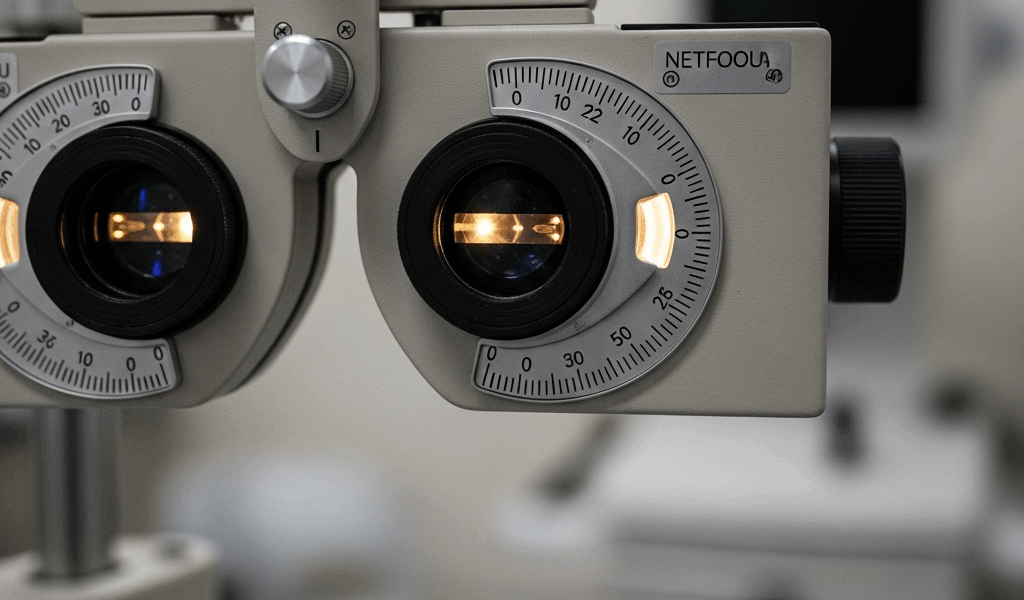
The Titmus Vision Test remains the most common screening tool across all branches. You sit in front of a stereoscope (a handheld device with two separate image pathways), and you’re shown a series of circles or shapes. One of the four circles in each group appears to pop forward in 3D space. Your job: identify which one. The test measures how small a depth difference you can detect. The Air Force standard? Typically 20 seconds of arc or better — meaning you can distinguish depth differences of roughly 3.4 millimeters at arm’s length. That’s microscopic precision.
The Randot Stereotest works similarly but uses a printed booklet with polarized glasses rather than a mechanical stereoscope. You flip through pages of random dot patterns. One section in each page creates a 3D effect if your stereoscopic vision is working. You identify shapes or letters that appear to float forward. The Navy often uses this during initial flight physicals. Passing threshold: typically 40 seconds of arc or better, slightly more forgiving than Air Force standards.
The Mentor B-VAT (Binocular Vision Assessment Tool) is the newer player in this game — more sophisticated, increasingly common in Navy and Army aviation medicine clinics. It’s computerized. You look into an optical device and identify which symbols appear closer. It’s faster, more precise, and harder to fake because the system adjusts difficulty in real-time based on your responses. Standard: 20 seconds of arc.
Testing environment matters more than you’d think. You sit in a darkened room, typically in a medical or optometry clinic. No distractions. The examiner ensures proper alignment and focuses the optical path for each eye individually. The test takes 2–5 minutes total. Sounds simple. It’s not.
Which branch uses what? The Air Force leans heavily on the Titmus test at initial flight physicals and annually thereafter. The Navy mixes Titmus and Randot depending on the clinic. Army Aviation tends toward the Mentor B-VAT at newer facilities. But standards don’t vary wildly — you need stereoacuity in the 20–40 seconds of arc range, depending on branch and career specialty. Fighter pilots face tighter standards than transport pilots.
Common Reasons Candidates Fail Depth Perception Testing
Failure doesn’t always mean you’re disqualified forever. Understanding why you might struggle helps you figure out whether it’s fixable.
Medical reasons: Amblyopia (lazy eye) is the heavyweight here. If one eye didn’t develop properly as a child — whether from misalignment, uncorrected refraction error, or disuse — that eye never fully contributes to stereoscopic vision. Your brain essentially ignores its input. No amount of squinting fixes this. Strabismus (eye misalignment) creates a similar problem: if your eyes don’t point at the same target, you can’t fuse the two images properly. Anisometropia (significant refractive difference between eyes) can degrade stereo acuity because one image is slightly magnified relative to the other.
I knew a prospective Naval aviator whose childhood hyperopia got over-corrected surgically. His stereo acuity measured 120 seconds of arc — six times worse than the standard. No medical waiver existed for that gap. That’s the hard truth sometimes.
Non-medical reasons: Test anxiety is real and common. You’re in an unfamiliar environment, wearing unfamiliar optical equipment, knowing this matters. Hands shake. Breathing gets shallow. Decision-making freezes. The test isn’t measuring pure biology; it’s measuring biology under pressure.
Unfamiliarity with stereoscopic viewing causes failures too. Some people need 30 seconds to relax their focus and let the 3D effect settle. If you’re expecting an instant, dramatic pop-out effect like a Magic Eye poster, you’ll second-guess yourself and miss answers you’d actually see with calm focus.
Fatigue degrades stereo acuity measurably. Testing at the end of a long flight physical — after vision tests, color vision tests, intraocular pressure checks — your visual system is tired. Your vergence (the ability of your eyes to point together) fatigues like any muscle.
How to Prepare and Improve Your Depth Perception Before Testing
Some conditions can’t be improved. Amblyopia, if present since childhood, typically can’t be fixed in adults. Medical waivers exist for borderline cases, but they’re rare. But if your stereo acuity is simply underdeveloped or rusty, training works.
Practical exercises: 3D video games — specifically games requiring precise spatial judgment like fighter pilot sims (DCS World, Falcon 4, or even consumer sims like Microsoft Flight Simulator) — train your brain’s stereoscopic processing. Spend 20 minutes three times weekly on these. Real results appear in 6–8 weeks for people with functional but weak depth perception.
Stereoscopic training apps exist, and they’re accessible. Several iOS and Android apps use your phone’s gyroscope or anaglyph/polarization techniques to present depth challenges. They’re cheap (free to $10) and genuinely useful for building stereo acuity. Look for apps labeled “stereo acuity training” or “stereoscopic vision training.”
Real-world exercises matter too: catch and throw a ball repeatedly — your depth perception guides the entire interception chain. Judge distances to distant objects (how far is that tree? Pace it off and compare). Play tennis or badminton. Climb or descend ladders focusing on hand-to-rung distance judgment. These seem trivial but they condition your vergence system and boost stereoscopic processing.
Practice on actual Titmus-style tests if you can. Some optometry schools allow practice runs. You get comfortable with the equipment and the visual task. Familiarity reduces test-day anxiety and improves performance by 10–15% on average.
What Happens If You Fail Depth Perception Testing
Failure doesn’t equal automatic disqualification, but it requires navigation.
First, you can request retesting. If you failed due to fatigue, anxiety, or unfamiliarity, ask for a retest after 2–4 weeks of preparation. You’re allowed one retest in most cases. Many candidates pass the second time.
Medical waivers exist for borderline cases — someone who measures 45–50 seconds of arc instead of the 20-second standard. The Aviation Medicine Consultant can request a waiver from the branch’s headquarters. These are rare and usually granted only for non-combat specialties (transport, cargo, training). Fighter pilot waivers for depth perception? Nearly nonexistent.
Appeal processes vary by branch. You can request a formal review of your test results and optometry evaluation. If the examining optometrist made an error in technique, administration, or scoring, that gets corrected. These appeals succeed maybe 5% of the time, but they’re worth pursuing if you suspect procedural problems.
Disqualifying conditions — permanent amblyopia, uncorrectable strabismus, significant anisometropia — end pilot careers. These aren’t negotiable. But borderline failures and correctable issues? Those have pathways forward if you know to pursue them.
Be honest with the flight surgeon about your vision history and any concerns. Transparency beats surprise failure three months into training.
“`

Leave a Reply