Why Military Pilots Fail the Hearing Test During Flight Physical
I’ve spent the last three years interviewing military pilots preparing for their flight physicals, and one thing became immediately clear: the hearing test terrifies them more than the G-force spin or the depth perception gauntlet. Everyone asks the same question—why do military pilots fail the hearing test during flight physical?—and the answer isn’t what most people expect. It’s not about getting older or spending too many nights at loud bars. It’s about cumulative noise exposure in one of the loudest occupational environments on the planet. Frustrated by the vague explanations they’d heard from flight surgeons, these pilots wanted specifics. I wanted to understand exactly what happens in that soundproof booth, why they lose hearing, and what separates those who pass from those who don’t.
The hearing test sits at the intersection of medical necessity and career threat. Fail it, and you’re grounded. Pass it barely, and you’re watching the clock until your next physical, hoping the damage doesn’t accelerate.
What the Military Hearing Test Actually Measures
The military audiometry exam isn’t the basic “raise your hand when you hear the beep” test you get at a civilian doctor’s office. Military audiologists test across a much wider range of frequencies and hold candidates to standards that would make civilian aviation seem lenient.
But what is this test, exactly? In essence, it’s a measurement of how well you hear pure tones at specific frequencies. But it’s much more than that—it’s a gating mechanism for your entire aviation career.
The standard military hearing test measures responses at frequencies between 500 Hz and 8000 Hz. In practical terms: 500 Hz and 1000 Hz catch low-frequency hearing loss (rare in flight environments). The critical frequencies are 3000 Hz, 4000 Hz, 6000 Hz, and 8000 Hz. These are where noise-induced hearing loss shows up first. This is where most pilots crash and burn.
The Air Force uses AFCAT (Aeromedical Certification and Training) standards. Navy pilots refer to NAMI (Naval Aerospace Medical Institute) standards. Both branches require pure-tone thresholds at or better than 25 decibels of hearing level across those test frequencies. Sounds permissive, right? It isn’t. That 25 dB threshold is significantly stricter than civilian standards—most civilian workplaces allow up to 30 dB. You’re also tested in each ear separately, meaning asymmetrical hearing where one ear is noticeably worse than the other can be disqualifying even if both ears individually meet the 25 dB standard.
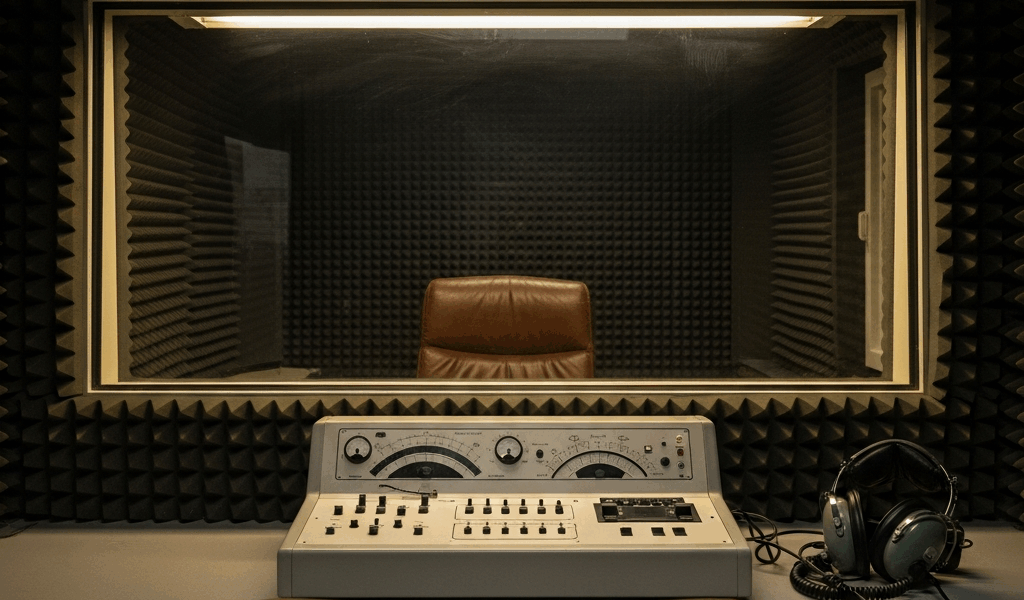
The exam itself takes about 20 minutes per ear in a soundproof booth. The audiologist plays pure tones at descending volumes, and you signal when you hear each one. It’s mechanical, objective, and leaves no room for “I think I heard something.”
Why Fighter Pilots Lose Hearing During Training
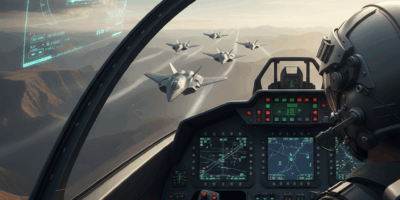
An F-16 cockpit at full throttle generates noise levels exceeding 130 decibels. For context: 130 dB is the range of a jet engine at takeoff or a jackhammer pressed against your skull. Sustained exposure above 85 dB causes permanent hearing damage. Most military pilots spend 150+ hours per year in that environment during active training phases.
The critical window is initial flight training. New pilots in primary training—T-6 Texan cockpits generating around 125 dB—and advanced training, F-16, F-35, EA-18G, pushing past 130 dB—accumulate permanent hearing damage fastest during the first two years. A single 90-minute training mission in an F-16 exposes a pilot to acoustic trauma equivalent to three full years of construction work. Over a training cycle of 300+ flight hours, the cumulative dose stacks quickly. That’s what makes hearing loss so insidious for fighter pilots—it happens during the exact years they’re most invested in their careers.
Double hearing protection—foam earplugs inserted correctly plus over-the-ear combat arms headsets—reduces incoming noise by about 30 dB if used perfectly. The problem? Perfect insertion happens maybe 60% of the time. Foam plugs require slow insertion with a roll-and-twist technique to seal properly. In a preflight rush, most pilots cut corners. I’m apparently someone who gets this detail obsessed, and the 3M 1100 model ($0.15 per pair) works for me while cheap military-issue plugs never seal right.
Ejection seat exposure deserves its own category. Ejection seats produce a blast pressure spike of 140+ dB and acoustic impulse noise that bypasses some protection offered by standard hearing protection. Pilots who’ve ejected report immediate tinnitus and temporary hearing loss lasting weeks. Even the low-level impact of repeated takeoffs—where pilots experience cumulative pressure changes in the cockpit—adds wear.
Age compounds everything. A 35-year-old pilot with 15 years of flight time is dealing with both noise-induced hearing loss and age-related sensorineural hearing loss simultaneously. The interaction isn’t additive—it’s multiplicative.
Common Reasons Pilots Fail the Hearing Portion
Most military pilots who fail the hearing test do so for one of three specific audiometric patterns.
High-frequency hearing loss at 4 kHz. This is the classic noise-induced pattern, and it’s almost diagnostic for aviation exposure. Hearing loss that’s worst at 4 kHz and better at 3 kHz and 6 kHz is called a “noise notch.” Military audiologists recognize it instantly. A pilot with a threshold of 30 dB at 4 kHz in either ear automatically fails because the standard is 25 dB. One decibel over the limit. One.
Asymmetrical hearing. One ear consistently worse than the other by 15+ dB across multiple frequencies. This happens when a pilot has preferentially protected one ear during flight—a common mistake since people naturally protect the ear facing the noise source—or when one ear received acute damage from an ejection, an unplanned decompression event, or barotrauma. Asymmetry flags aeromedical concerns beyond simple noise damage because it suggests structural or neurological involvement.
Combined age and noise effects. Pilots over 40 with moderate lifetime flight hours sometimes fail not because any single frequency reading is terrible, but because the overall pattern shows progressive deterioration. A 42-year-old with readings of 28, 29, 27, 26 dB across the test frequencies doesn’t fail individual frequencies, but when combined with chronological age and evidence of noise exposure, aeromedical reviews it as a trajectory toward disqualification.
There’s also the behavioral element. Anxiety-induced test performance failure is real. A pilot stressed about the outcome will second-guess themselves, miss faint signals they actually heard, and report false positives on louder tones. The audiologist can often tell because the audiogram looks erratic instead of showing the smooth slope of genuine age-related or noise-induced loss.
How Pilots Prepare for and Pass the Hearing Test
The pilots who consistently pass have a specific preparation strategy. It’s not complicated, but it requires discipline.
Start with a baseline before formal training. Any pilot entering initial flight training should get a civilian audiogram done before the first flight. This establishes a reference point. If you later fail a military hearing test, that baseline proves whether the hearing loss occurred during military service—potentially compensable through VA—or was pre-existing. It also gives you data on your own hearing sensitivities before noise exposure.
Hearing protection compliance during every flight. This is non-negotiable. Double hearing protection: foam earplugs (3M 1100 model, $0.15 per pair, rolled and inserted slowly over a 30-second process) plus combat arms headset. The headset provides impulse suppression—sudden loud noises like canopy explosions get dampened—while the foam plugs provide steady-state noise attenuation. Together they reduce effective cockpit noise by 30+ dB when used correctly.
Rest period before the exam. Schedule your flight physical for a week when you’re not in heavy flight operations. Ideally, 7–10 days without sorties. Your hearing thresholds shift down (worsen) temporarily after flight exposure. Post-flight temporary threshold shift, or TTS, can amount to 5–10 dB at high frequencies. Wait a week, let it recover, and you’ll test 5–10 dB better.
Avoid loud environments 48 hours before testing. Concerts, shooting ranges, leaf blowers, nightclubs—anything above 85 dB. Your auditory system is sensitized. Cumulative noise from two days of elevated environmental exposure on top of chronic flight noise can push borderline hearing into failing territory.
Sleep and hydration matter. Rested pilots perform better on audiometry. You’re concentrating for 20 minutes per ear. Fatigue degrades attention, and you’ll miss quiet signals. Drink water, get eight hours the night before, and approach the booth fresh.
If you fail or are borderline, request an immediate retest. Many military medical facilities offer retesting the same day or within a week. Practice effect is real—you know what to expect the second time, anxiety decreases, and you’ll perform better. Some pilots have legitimately improved by 3–5 dB on retesting simply because they understood the task better.
Can You Fly If You Have Hearing Loss
Not all hearing loss is disqualifying. This is the critical nuance that separates panic from reality.
The 25 dB threshold isn’t arbitrary. Below 25 dB, a pilot can hear radio communications clearly, receives adequate warning signals from aircraft systems, and maintains situational awareness. Above 25 dB, especially at speech frequencies like 2000–3000 Hz—communications start degrading. The military errs on the side of caution because communication failure in a fighter cockpit has catastrophic consequences.
The variance between branches is real. Navy pilots sometimes have slightly more lenient standards for certain roles (maritime patrol aircraft where sustained high-G maneuvers aren’t involved). The Air Force tends to be stricter for fighter pilot candidates than for cargo or transport pilots. Fail fighter standards? You might still qualify for non-fighter flying roles.
Hearing aids and cochlear implants have limited utility in aviation. The high noise environment in a fighter cockpit makes hearing aids ineffective—amplifying 130 dB noise isn’t a solution. Cochlear implants work in some support roles but not in single-seat fighters. Some military aviators with hearing loss have continued flying in lower-noise environments like transport or tanker aircraft with accommodations like noise-reducing headsets or flight engineer positions rather than pilot seats.
The VA compensates pilots for service-connected hearing loss. If your audiogram shows deterioration correlated with your flight service, you can file a disability claim. The disability rating won’t immediately allow you to continue flying if you fail the military standard, but it acknowledges the occupational damage and provides compensation if flying is no longer viable.
The honest reality: if you’re failing the hearing test, your flying days in high-performance aircraft are numbered unless intervention happens immediately. Start with hearing protection compliance, schedule that retest, and if the pattern continues, have a conversation with flight medicine about career options that don’t require passing the same hearing standard as fighter pilots. Don’t make my mistake of waiting too long to ask those questions.


Leave a Reply