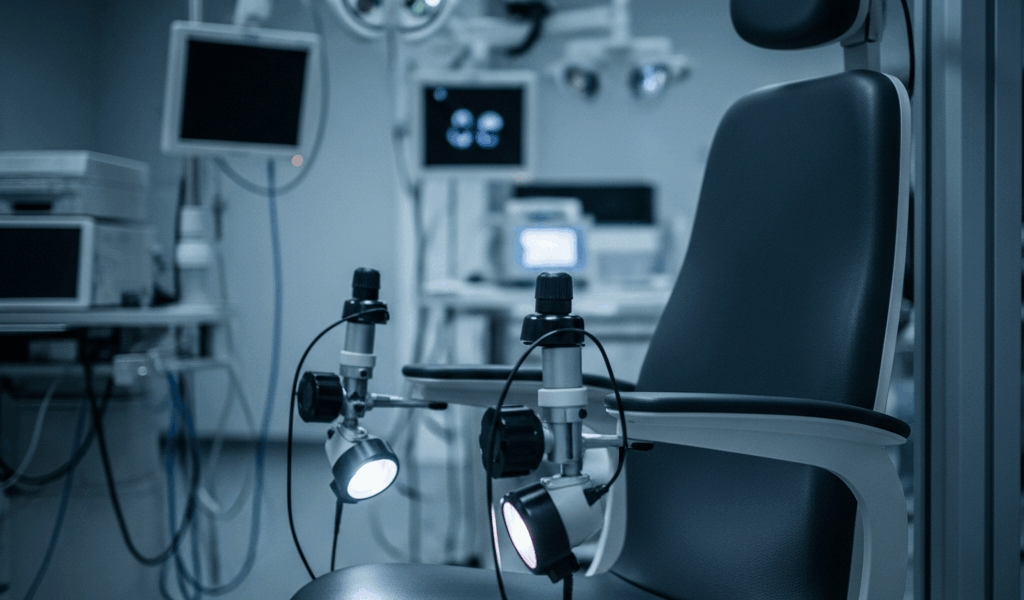
What the Vestibular Function Test Measures
The vestibular system controls your sense of balance and spatial orientation — three fluid-filled semicircular canals in your inner ear, packed with hair cells that detect motion and gravity. Military pilots fail the vestibular function test because they don’t understand what examiners are actually evaluating. That’s my first observation about this whole process.
As someone who spent eighteen months prepping candidates for flight physicals, I learned that the vestibular test isn’t measuring courage or flying ability. It’s measuring reflex. Specifically, whether your inner ear can detect rotational movement and communicate that information to your eyes and brain fast enough to maintain visual focus during high-G maneuvers.
Commercial pilots need basic balance. Military pilots operate under different rules — they fly inverted, execute 4-G turns, operate in environments where the horizon disappears and your inner ear becomes your primary navigation instrument. The vestibular function test replicates those demands at ground level.
The military uses a standardized battery of three specific tests. Each one isolates different components of the vestibular-ocular reflex — that critical connection between inner ear motion detection and eye stabilization. Fail any one component, and you’ll be flagged. Fail two, and you’re medically disqualified, period.
The Three Vestibular Tests You’ll Face
The Dix-Hallpike Maneuver
You’re seated. The examiner supports your head and shoulders. Then — quickly — you’re lowered backward until your head hangs off the edge of the table at about 20 degrees below horizontal, turned 45 degrees to one side. Your eyes stay open the entire time.
The examiner watches for nystagmus. That’s involuntary eye jittering. Normal pilots show minimal, brief nystagmus that stops within 30 seconds. Pilots who fail? Persistent eye movements, delayed onset, or nystagmus that reverses direction unexpectedly.
Most failures happen because candidates tense up. Your neck muscles contract. Your vestibular system detects that muscle tension as motion. Your eyes start tracking phantom movement. The examiner sees exactly what’s happening, makes notes, and you know you’ve failed before the test ends.
Caloric Testing
This one feels strange. You’re lying flat on your back. The examiner irrigates each ear canal with warm water (around 44°C) for about 40 seconds, then cool water (around 7°C) for another 40 seconds, with a five-minute interval between ears.
Temperature change creates a pressure gradient in the fluid inside your semicircular canals. That pressure triggers canal motion detection — artificially, but measurably. The examiner uses infrared video goggles to track your eye movements with millimeter precision.
Failure looks like weak response (slow eye movement onset), asymmetrical responses (one ear reacts differently than the other), or reversed responses (eyes move the wrong direction for the temperature stimulus). Candidates also fail because they’re anxious about the water — their eyes dart around instead of tracking the predictable pattern the test requires.
Rotary Chair Protocol
You sit in a motorized chair inside a dark booth. Your head’s locked in place. The chair rotates at increasing speeds — starting at 30 degrees per second, stepping up to 60, then 90. A visual target (usually a dot or cross-hair) moves or stays fixed on a screen in front of you. You track it.
This test directly measures how your vestibular system maintains visual focus during sustained rotation. The examiner measures gain (how well your eyes track the target), phase (timing accuracy), and asymmetry (whether your performance changes based on rotation direction).
Pilots fail because they lose focus or anticipate the visual pattern instead of responding reflexively. Some tense their neck and shoulders, which adds false vestibular signals. Others panic about the motion itself, and their performance deteriorates within the first 30 seconds.
Why Pilots Fail the Vestibular Exam
Probably should have opened with this section, honestly. Understanding failure patterns lets you self-diagnose before the official test.
Inner Ear Dysfunction
Some people have legitimately weak vestibular systems. Benign paroxysmal positional vertigo (BPPV), Meniere’s disease, or chronic vestibular hypofunction won’t disqualify you automatically — but unmanaged versions will tank your test. If you’ve had vertigo episodes, ear infections, or balance problems in the past year, get pre-evaluation from an audiologist before your flight physical. Don’t risk it.
Anxiety-Induced Vertigo
Psychological state directly affects test performance. Your amygdala hijacks the vestibular reflex during anxiety. Eye tracking becomes erratic. Nystagmus appears where none exists. I’ve watched candidates pass identical tests in a relaxed setting, then fail in the military medical facility because the stakes felt higher. Practice in the exact testing environment if possible.
Overtraining Without Rest
This kills people. Pilots often overtrain vestibular drills — multiple daily sessions for weeks. Your vestibular system needs recovery time between intense stimulation. Exhausted hair cells send garbled signals. Performance actually degrades. Train 3-4 times weekly instead, with 48-hour intervals between sessions.
Dehydration
The fluid in your semicircular canals responds to osmotic pressure changes. Dehydration alters that pressure gradient and disrupts vestibular sensitivity. Arrive for your test fully hydrated — not chugging water the morning-of, but consistently hydrated for the full week preceding your exam.
Medication Interactions
Antihistamines, decongestants, and motion-sickness medications suppress vestibular function artificially. So do some blood pressure medications and selective serotonin reuptake inhibitors at certain doses. If you’re taking anything regularly, disclose it to the flight surgeon at least two weeks before testing.
Training Drills to Improve Vestibular Response
Gaze Stabilization Exercise
Fix your eyes on a letter or number on a wall. Move your head side to side — slowly, then faster — while keeping your gaze locked on that target. Your eyes should stay perfectly still while your head moves. Do this for 30 seconds, rest, repeat for three sets. Progress by turning your head in figure-eight patterns. Five days weekly for 6-8 weeks before your test date.
Balance Board Training
Stand on a 16-inch wobble board barefoot. Week one: just maintain balance for 60 seconds with eyes open. Week two: try eyes closed. Week three: add head turns — side to side, then up and down — while maintaining balance. Week four: catch and throw a tennis ball against a wall while on the board. Three times weekly, 10 minutes per session.
Head Movement Protocol
Sit upright. Fix your eyes on a point directly ahead. Rotate your head 30 degrees left-right for 30 seconds at a comfortable pace, then increase speed for another 30 seconds. Repeat with vertical head movement (chin to chest, head back). Then diagonals. Each direction gets three sets. Daily for the final four weeks before your test.
Epley Maneuver Basics
If you’ve ever experienced positional vertigo, master the Epley maneuver (named after otologist John Epley). Sit on your bed, turn your head 45 degrees to one side. Lie backward — head off the bed, supported briefly by your hands — then release. Stay there 30 seconds. Turn your head 90 degrees to the other side (stay lying back). Then roll onto your side. Sit up slowly. This repositions dislodged calcium carbonate crystals in your inner ear. Skip this if you haven’t had BPPV symptoms.
Progression Timeline
Week 1-2: Foundation work. Gaze stabilization and static balance board practice. These should feel almost easy. You’re establishing baseline vestibular responsiveness.
Week 3-4: Increase speed and complexity. Add head turns to balance work. Introduce head movement drills at moderate tempo.
Week 5-6: High-intensity work. Perform gaze stabilization while on the balance board. Execute rapid head movements. Push board training to eight-minute sessions.
Week 7-8: Maintenance and final prep. Reduce frequency but maintain intensity. Focus on the specific test-relevant drills — head turns for Dix-Hallpike simulation, rotational drills for chair testing.
When to See a Vestibular Specialist Before Your Flight Physical
Some red flags warrant professional evaluation before your military medical exam.
You should see an audiologist or ENT if you’ve experienced unexplained vertigo in the past six months. If you have a history of ear infections — especially recurrent ones — get cleared first. If you notice asymmetrical hearing, tinnitus in one ear, or balance problems that change unpredictably, seek evaluation immediately.
If you fail informal gaze stabilization drills (can’t keep your eyes fixed on a target while moving your head at normal speed), that’s diagnostic. Same if you can’t stand on one leg with eyes closed for 30 seconds. Schedule a specialist appointment instead of gambling on the military test.
Early intervention costs $200-400 for an audiological workup. Failing your military vestibular test costs your slot, delays your timeline three to six months, and triggers medical review that complicates future applications. Invest in pre-evaluation.
Vestibular function testing isn’t mysterious. It’s reproducible. Your system either responds correctly to inner ear motion detection or it doesn’t. Train systematically, understand the three specific tests, and address underlying issues before exam day. That’s how you pass.

Leave a Reply