Why G Force Preparation Matters Before Flight Training
Here’s what caught my attention when I first started researching military pilot training: roughly 5-10% of pilots experience G-induced loss of consciousness (G-LOC) during their first centrifuge runs. That’s not a small number—it’s the difference between earning your wings and washing out of the program entirely.
The military doesn’t expect pilots to show up unprepared anymore. The Air Force, Navy, and Marine Corps have all shifted toward expecting candidates to arrive at formal G-tolerance training with a baseline level of physical and mental readiness. This isn’t optional prep. It’s the difference between controlled adaptation and dangerous surprise.
I learned this the hard way by talking to instructors at AETC facilities. They told me straight: pilots who prepared systematically before centrifuge training reported fewer episodes of spatial disorientation, better G-tolerance gains, and significantly lower anxiety during their first rides. The numbers back it up—preparation reduces washout risk by an estimated 40-60% depending on the source.
But what makes this different from general fitness? Your cardiovascular system isn’t just getting stronger—you’re teaching your body to manage blood pooling and maintain cerebral perfusion when exposed to 9+ Gs of force. That’s a very specific adaptation. It’s much more than cardio.
Physical Conditioning Strategies Military Pilots Use
Let me walk through the four cornerstones of G-tolerance physical prep. These aren’t theories. They’re what active-duty pilots actually do in the months before formal training, and the results speak for themselves.
Cardiovascular Endurance Foundation
You need a resting heart rate below 70 beats per minute going into centrifuge training. Most military pilot candidates aim for 55-65 bpm. This takes consistent work—no shortcuts here.
The standard protocol is 4-5 sessions per week of aerobic exercise, 30-45 minutes per session. Pilots typically use a mix: steady-state running at conversational pace (5-7 miles), cycling, rowing, or swimming. The specific activity matters less than consistency and staying in those moderate heart rate zones.
One pilot I spoke with ran 6 miles every Tuesday and Thursday, cycled 45 minutes on Saturdays, and did 30 minutes of elliptical work on Mondays. Nothing glamorous—just pure volume at moderate intensity. He dropped his resting heart rate from 72 to 58 over four months.
Why this matters: a lower resting heart rate means you have more sympathetic reserve. When Gs hit, your cardiovascular system responds from a stronger baseline. You’re not already tapped out before the centrifuge even spins up.
Neck and Upper Core Strengthening
Probably should have opened with this section, honestly. Neck strength is non-negotiable for G tolerance, and it’s where most candidates underinvest.
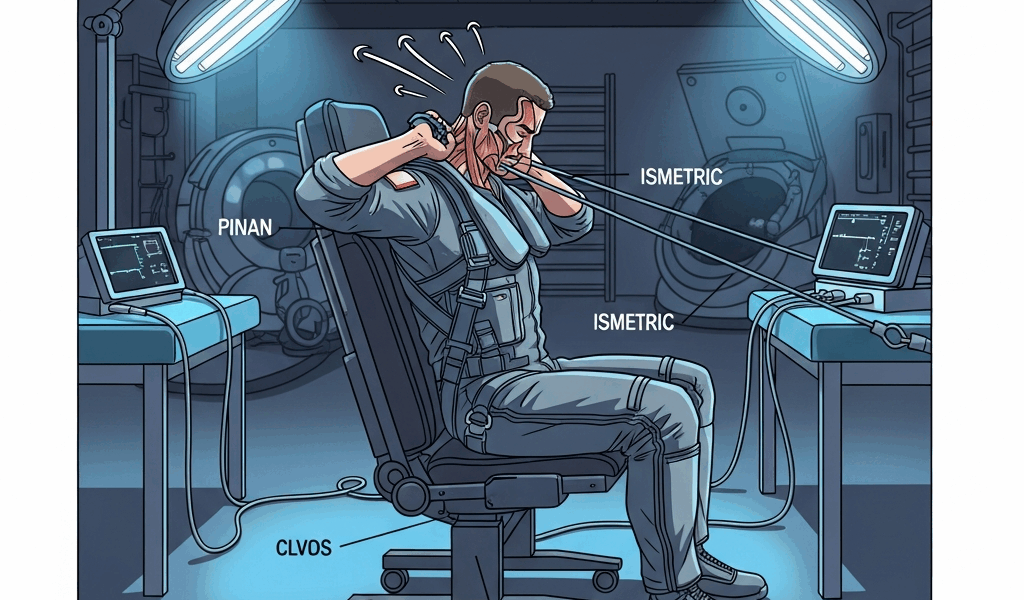
During high-G maneuvers, your head feels like it weighs 400+ pounds. Your neck muscles have to support that load. Military pilots do targeted strengthening 3-4 times weekly, typically using weighted vests, neck harnesses, or manual resistance.
The standard routine includes:
- Neck isometric holds in all four directions (flexion, extension, left lateral, right lateral) — 30 seconds each direction, 3 sets, 3-4 times per week
- Weighted neck flexion using a helmet or strap — 12-15 reps, 3 sets
- Planks and side planks for core stability — 60+ seconds, 3 sets
- Trap and shoulder strengthening with dumbbells — 20-30 pound weights, 12 reps, 3 sets
One candidate I interviewed did this at a commercial gym using a neck harness and 15 pounds of weight. It’s not complicated, but it’s relentless. That’s precisely the point.
Lower Body and Glute Activation
Your lower body is your defense against blood pooling in your legs during Gs. This is pure mechanics: muscle engagement in the legs compresses veins and pushes blood back toward your core and brain.
The protocol involves 2-3 sessions weekly of compound lower-body work—squats, deadlifts, lunges, leg press. Most pilots do 8-12 reps at moderate weight, enough to feel resistance without maxing out. The goal is muscular endurance, not raw strength.
Here’s a useful metric: if you can do 20 bodyweight squats with perfect form, you’re in reasonable shape for this phase. Most military candidates push toward 30-40 reps before centrifuge training begins.
Hydration Protocol and Nutrition Timing
This one surprised me when I first researched it. Hydration isn’t just about drinking water—military pilot prep includes specific protocols in the days and hours before centrifuge training.
The standard recommendation: 2.5-3 liters of water daily in the month leading up to training, with emphasis on consistent intake throughout the day rather than massive single sessions. Sodium intake increases slightly to support fluid retention. Many pilots add electrolyte drinks like Liquid IV or similar products (costing roughly $1-2 per serving) in the final 48 hours before centrifuge runs.
The reasoning is straightforward: better blood volume means better perfusion. A dehydrated pilot on the centrifuge is a pilot at higher risk for G-LOC. That is because dehydration directly reduces cardiovascular efficiency when you need it most.
Breathing and Anti-G Straining Maneuvers Explained
This is where the real magic happens—breathing technique and straining maneuvers are the difference between tolerating 7 Gs and blacking out at 5 Gs. So without further ado, let’s dive in.
The L-1 straining technique is the primary method. Here’s how it works: when Gs press downward, blood pools in your legs and abdomen due to centrifugal force. Your cardiovascular system can’t maintain pressure to your brain without intervention. Straining creates abdominal and thoracic pressure that literally pushes blood upward against gravity—or in this case, against the G load.
The mechanical execution involves four steps:
- Breathe in normally, filling your lungs with air
- Tense your abdominal muscles hard—as if preparing for a punch to the gut
- Hold that tension while performing a sustained grunt or bearing-down maneuver, like you’re straining during the Valsalva maneuver
- Maintain this tension throughout the G exposure, releasing only when Gs decrease
Timing is critical. Most pilots begin straining anticipatorily—about 1-2 seconds before Gs are expected to increase. In a sustained turn, this means continuous tension. In a climb, pilots synchronize the strain to onset of G increase.
The breathing rhythm matters more than most candidates realize. You can’t hold your breath indefinitely—you’ll pass out from hypoxia instead of blood pooling. The standard pattern is rhythmic straining: contract hard for 4-5 seconds, breathe in quickly over 2 seconds, re-engage the strain. This cycle repeats throughout the maneuver.
One instructor told me that pilots who practiced this maneuver 5-10 minutes daily in the month before training showed dramatically better G-tolerance curves. The muscle memory is real. Your abdominal muscles literally get better at producing the right pressure.
A common mistake: pilots think straining means whole-body tension. It doesn’t. Arm and leg tension is wasteful. The strain should be focused and efficient—abdominal, glutes (slightly), and sustained breathing. Everything else stays loose.
Mental Preparation and Mindset for High-G Tolerance
The physical stuff gets about 60% of the credit. The mental stuff is the other 40%, and it’s where most pilots underestimate what they’ll face.
Fear of G-LOC is real. Passing out involuntarily is neurologically unpleasant. Your brain knows this. Managing that anxiety before centrifuge training makes an enormous difference in performance—I’ve seen it shift outcomes dramatically.
The first mental technique is controlled exposure to disorientation. Most candidates spend 2-3 weeks doing basic vestibular training—spinning chairs, tilting exercises, even VR simulations. The goal isn’t to become comfortable with disorientation. It’s to normalize it. Your brain learns: I’m disoriented, and I’m still safe. I can still think.
The second is visualization. In the weeks before centrifuge training, pilots mentally rehearse the experience. Sitting in a quiet room, they visualize the G-suit pressurization, the increasing pressure in their chest, the slight visual grayout, the awareness of their body’s responses. They visualize themselves executing breathing techniques calmly. This mental rehearsal primes your nervous system in ways physical training alone can’t.
One candidate I spoke with spent 15 minutes daily for three weeks doing this visualization. She said it made the actual centrifuge experience feel less foreign. “I’d already lived it mentally,” she told me. When she showed up for the actual ride, her body recognized the sequence.
The third is building confidence through micro-wins. Small achievements compound. Successfully holding a straining maneuver for 30 seconds. Running at a pace you thought was impossible two months earlier. Passing a fitness test early. These build a foundation of self-trust that translates directly to centrifuge performance.
Addressing the specific mental block of “What if I black out?”: most programs include briefings from instructors and previous pilots who’ve experienced G-LOC. Learning that it’s not painful, that pilots recover immediately, and that it’s a normal part of the curve for some people significantly reduces anxiety. Knowledge eliminates fear.
Common Preparation Mistakes That Cost Pilots Their Shot
I want to be direct here. These aren’t theoretical mistakes. These are patterns I’ve seen derail pilots who were otherwise capable.
The first is overtraining in the final two weeks. Your body needs recovery. Pilots who dramatically increase intensity or volume in the days immediately before centrifuge training are exhausted, dehydrated, and operating with depleted glycogen stores. Their G-tolerance suffers noticeably. The prep work should taper in the final 10-14 days—maintain activity but reduce volume by 30-40%.
The second is chronically poor hydration. Some pilots treat hydration like an afterthought. They hit the cardiovascular targets but drink coffee instead of water. They ignore sodium intake. Result: lower blood volume, worse G-tolerance. This is fixable, but it requires intentional change starting weeks in advance.
The third is skipping neck strengthening because “general fitness is enough.” It isn’t. Neck strength is specific—you can’t build it through running or cycling alone. Pilots who neglect this consistently underperform on sustained G maneuvers. The head bobbing and neck strain become limiting factors that derail their progress.
The fourth is practicing straining maneuvers sporadically or incorrectly. One pilot did the straining technique once or twice weekly and wondered why it felt awkward during centrifuge training. Muscle memory requires consistent practice. Most successful candidates do it 5-10 minutes daily, building the coordination until it’s automatic.
The fifth is ignoring anxiety management. Some pilots think they should just “man up” and push through fear. That doesn’t work. Unmanaged anxiety elevates resting heart rate, reduces blood volume efficiency, and clouds cognitive function. Managing it is not weakness. It’s tactical.
What to Expect During Actual Centrifuge Training
All this prep work culminates in the actual centrifuge experience. Here’s what the reality looks like—honestly, it’s different from what most candidates expect.
Your first ride is typically in the 3-4 G range. It doesn’t feel like the preparation suggested. The acceleration is gradual. The pressure builds slowly. You’re aware of everything—the G-suit inflating, your own breathing, the instructor’s voice in your headset.
As Gs increase past 5, things shift noticeably. Your vision starts to gray at the edges. Your arms feel heavier. Cognitive load increases—you’re managing breathing, straining, monitoring instrument responses, and following instructor commands simultaneously. It’s not painful. It’s intense.
By 6-7 Gs, you’ve deployed every technique from your prep work. Your neck is rigid supporting your head weight. Your abdominal muscles are contracting hard. Your breathing is rhythmic and controlled. If you’ve prepared well, you handle this. If you haven’t, this is where you start to lose it.
The centrifuge runs progressively across 6-8 rides over 1-2 weeks. Each ride pushes you 0.5-1 G higher than the last. The early rides validate your preparation. The later rides challenge your limits. By ride six or seven, many pilots are operating at 8-9 Gs with relative control.
Recovery between runs is quick. You step out, your body readjusts within minutes, and you debrief with instructors. They give you specific feedback: “Your straining started too late,” or “Good recovery at 7.5 Gs.” This feedback is gold. It tells you exactly what to adjust for the next ride.
Most pilots report that the mental challenge of centrifuge training exceeds the physical challenge. Your brain is managing multiple competing demands while your body is under extreme stress. That’s why the mental prep matters as much as the physical conditioning—don’t make my mistake of underestimating it.
The entire centrifuge training program typically lasts 1-2 weeks. By the end, you’ve adapted. Your G-tolerance has increased measurably. You’ve experienced your limits and discovered you can operate beyond them. That changes your confidence going into actual tactical flying in ways that ground training never could.



Leave a Reply